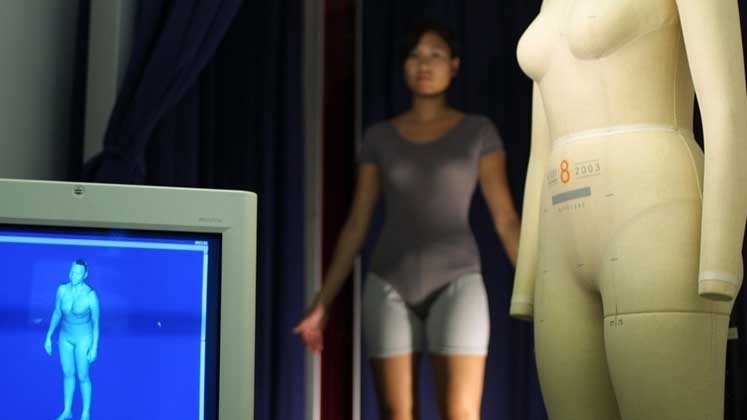
Under Armour, US sportswear giant, has partnered with Alvanon, apparel size and fit specialist, to digitise its fit forms to create a range of 3D Digitise avatar across sizes running from an infant 0 to men’s 5XL.
These avatars depict the fits by providing a full representation of real bodies across menswear, womenswear and kidswear and thus help the brand in making products with better fits.
The technology by Alvanon helps companies turn to 3D virtualisation, reducing the time and cost of design and development that is otherwise invested in physical sample making process.
“When we fit product on fit forms across the size scale, it does not always follow a mathematical equation of traditional grading,” explains Jami Dunbar, Vice President, Apparel and Accessories Development and Supply Chain Operations, Under Armour. “Working on large volume allowed us to consider a lot of different body shapes, and now we can move confidently in 3D to fit bodies.
“Under Armour had been using 3D in its core size for some time and this was the next progression of how we can develop that on a full-size range and make sure that we are really fitting everyone in the market exceptionally well. Today’s consumers expect apparel to fit and look good on them at every size. That’s where 3D can help. Whether you’re using ASTM parametric or custom we believe these virtual assets (standard avatar size sets) will help brands and retailers resolve their sizing issues much faster,” said, Tracy Rickert, Senior Consultant, Alvanon.
Prior to this, the brand was an instrumental beta partner in Alvanon’s recent development of the Alvanon Body Platform. The platform allows different brands and retailers to share and access their 3D fit and core body standards with supply chain partners.
The cloud database gives access to 6,000 avatars for the first time to the global brands and retailers for the design and development of their products.
“3D is definitely changing our industry; everyone in retail is starting to touch the technology. And the beautiful thing about it is that there’s a great deal of collaboration across brands. Everyone protects their IP, but we all know working together is the way forward, and the way we’re all going to be able to visualise and make great product,” explains Dunbar.