Nepal Govt lobbying for RMG’s access to US market

Nepal
Image Courtesy: nepaliblogger.com

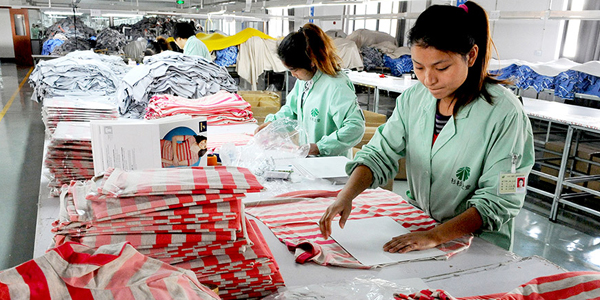
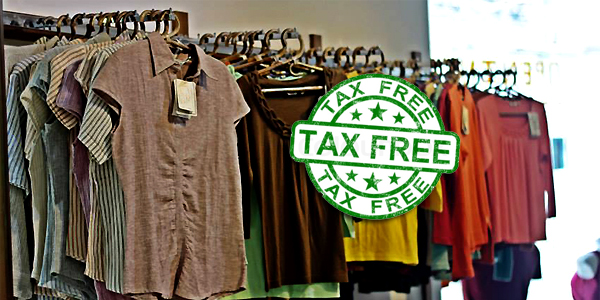
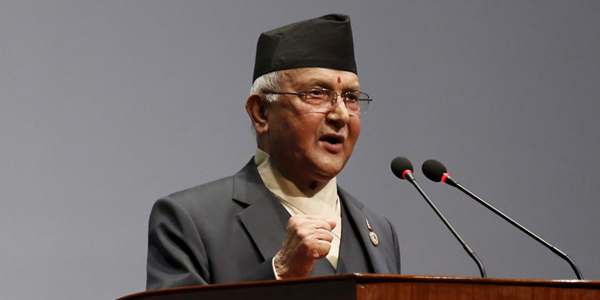
Nepal’s Prime Minister K P Sharma Oli on Tuesday assured garment makers that the government would lobby the US government to gain duty-free, quota-free access to the American market for all types of readymade garments.

Currently, the benefit is applicable to only 40 per cent of the country’s garment products exported to the US.

Speaking at the 65th annual general meeting of the Nepal Chamber of Commerce (NCC), Oli urged the garment producers to increase their manufacturing capacity so as to ensure smooth and regular supplies to the American market.

According to a US legislation signed on February 24, special trade preferences wee given to Nepal, under which Nepali garment exporters could avail duty-free tariff benefits for up to 66 types of garment items like carpets, headgear, shawls, scarves and travel goods. However, this duty-free facility, which will be in effect till 2025, is applicable to only 40 per cent of the Nepali garments being exported to the US. Several garment producers were disappointed to hear that their products are not currently included in the duty-free list, to which Oli assured them that he would lobby to gain duty-free, quota-free access to the American market for all types of readymade garments.

Further, Oli urged the private sector to come up with rational demands for the economic development of the country. Concerned over the overall development of Nepal, he said, “The government will try to address the genuine demands through its policy and programmes, and the upcoming budget.”

Stressing on the need for industrialisation, Industry Minister Som Prasad Pandey said, “For the purpose, industries based on domestically available raw materials are necessary.”
 

Business keyboard_arrow_right Sourcing keyboard_arrow_right News

AR Exclusive: Indian apparel exporters tapping into Nepal’s manufacturing capacity

Nepal Garment

It may be too early to gauge Nepal’s potential as a sourcing destination for Indian apparel exporters in its totality, but it should come as no surprise that some Indian companies have already started exploring this market, looking for prospects here.

Taking a closer look at the recent developments in Nepal, which currently exports garments worth US$50 million, would reveal several changes that goes in the favour of traders looking for business with this Himalayan country.

The Nepal Government is planning to develop a Garment Processing Zone (GPZ) within the Simara SEZ of Bara district, aiming to lure foreign direct investment. The US House of Representatives recently passed a Bill, allowing duty-free access to Nepalese readymade garments until 2025. Moreover, the country’s Ministry of Commerce is also pushing all agencies to work collectively for the promotion of exports, and for the setting up of an ‘export promotion cell’ to better streamline export activities in the county as well as deal with supply constraints.

Meanwhile, a few Indian companies are also exploring Nepal, looking at it as a low-cost manufacturing destination.

Ludhiana-based Aadit Apparel is one of such company, whose Director Prabhat Gupta told Apparel Resources, “We had meetings with Nepal-based garment manufacturers, and discussions are underway. In the coming months, we expect to start a joint venture with them.”

Apart from Aadit Apparel, Apparel Resources are in the know of two more Indian companies being in talks with their Nepalese counterparts. However, they have refused to be named, given that their plans are still at a very early stage.

Speaking on what attracted Prabhat Gupta towards Nepal, he says, “Being from Bihar, very close from the Nepal border, we are familiar with the country as well as the industry there. Political stability is also an important aspect here. Also, garments made in Nepal is almost 20 per cent cheaper those made in India. Overheads are much less there; labour is easily available there, with plenty of workers from Bihar migrating to Nepal to find work.

“Import of fabric from China is also comparatively easy in Nepal. Compared to Ludhiana or even Bihar, Nepal seems to be a good option,” he adds, while expressing his firm belief that Nepal will be an important sourcing destination in the future.

With a capacity of 1 lakh pieces a month, his company basically deals with menswear. It caters mainly to the US and South Africa, as well as domestic brands too.

India’s trade barriers giving Nepal’s traders a hard time

tariff
Courtesy: https://kathmandupost.ekantipur.com

Tariff and non-tariff trade barriers imposed by India, which happens to be Nepal’s largest export destination, accounting for nearly two-thirds of Nepal’s trade, have severely restricted Nepal’s export potential, including its textile business, believe traders and experts alike.

Counter veiling duty (CVD) on Nepali ready-made garments, apart from copper and brass utensils and kattha, along with “quantitative restrictions” on acrylic yarn, vegetable ghee and copper utensils have caught the country in a very difficult position.

Also read – Nepalese garments entrepreneurs await clarity on duty-free facility by US

“Nepali traders are forced to pay transit fees for exporting medicinal herbs in neighbouring Uttar Pradesh state of India,” said Purushottam Ojha, former Commerce Secretary.

He also maintained that India should provide tariff preferences on agriculture and primary goods on a reciprocal basis, going by the bilateral trade treaty between two countries.

“However, the imposition of non-tariff barriers (NTB) is high as far as Nepali products are concerned,” Ojha added.
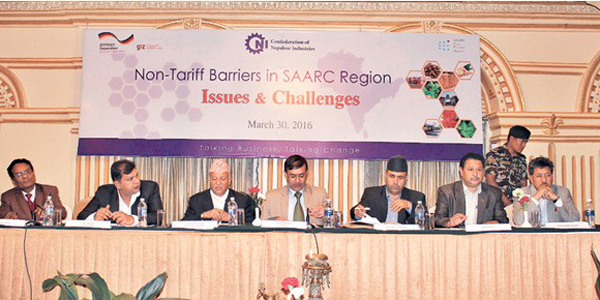
He was speaking at a workshop on “NTB in Saarc region: Issues and Challenges” organised by the Confederation of Nepalese Industries (CNI) in Kathmandu on Wednesday.

According to him, India should provide free access to Nepali goods, not containing more than 70 per cent imported raw materials. “However, India has been imposing 6-12 percent of the CVD on 30 percent of the maximum retail price of the branded Nepali ready-made garments,” he said.

Although Nepal has long been seeking waiver of the CVD, India has been reluctant to do so, which became obvious during a recent interaction in Kathmandu regarding the CVD with Indian Ambassador to Nepal Ranjit Rae.

Nepal Army to now operate garment factory

Nepalese Army
Image Courtesy: https://img01.militaryblog.jp

The Nepal government has allowed Nepal Army (NA) to operate a garment factory to manufacture products needed for its personnel. This will be set up in Kathmandu.

The government took this decision at the 228th meeting of the Industrial Promotion Board (IPB), chaired by Industry Minister Som Prasad Pandey, on Tuesday (March 15). As per the proposal, NA will invest Rs 77.5 million on the factory.

Maheshwor Neupane, Member Secretary of IPB said “They have been given a waiver because NA proposed to produce garment products only for their personal use,” He further pointed out that “The waiver is not for the private sector.”

This is the first time that NA has got the approval to run a factory. The garment factory will be registered under the name ‘Bahu Byabasayik Udyog’, located at Kalikasthan in Kathmandu. The company was previously registered with Department of Industry (DoI).

According to Nepalese Army’s proposal, the industry will have a fixed capital of Rs44 million and working capital of Rs4.5 million. Furthermore, they have intended to produce 30,000 jerseys, 64,000 vests, 342,000 socks, 124,000 blankets, 50,000 mosquito nets, 50,000 caps and 50,000 bags with 41 army personnel employed in the factory.


Nepalese garments entrepreneurs await clarity on duty-free facility by US

money.cnn.com
Image Courtesy: money.com

Garment entrepreneurs in Nepal are waiting for March 11, when Deputy Assistant Trade Representative Dawn Shackle is scheduled to visit Nepal from the US, and is expected to give them clarity on the products that will get preferential treatment in the US market.

The United States, through a recently enacted Trade Facilitation and Trade Enforcement Act, has extended duty-free access to 66 Nepali items to its market, including apparels. However, it is still not clear which items will come under the purview of the Act. In this regard, Garment Association, Nepal has also approached lawyers in the United States to interpret the recent law, who, however, were not very helpful in clearing the air over the Act either. According to Chandi Aryal, Acting President of the Garment Association, Nepal, “We are waiting for the Deputy Assistant Trade Representative’s visit to be clear about the facility.”

Also Read – Nepal aims for bigger chunk in US; to set-up Garment Processing Zone

Meanwhile, Nepali entrepreneurs hope that a majority of apparel items will be incorporated in the law. They hope that the recently ratified Act is like the African Growth Opportunity Act (AGOA), which deals with preferential treatment in export to the US market from African countries.

Aryal said, “The United States has been extending duty-free facility to all apparel items exported from African countries to the US market under the same provision that has been extended to Nepal.”

However, AGOA has incorporated 1,800 African products, while Nepal received duty-free access for only 66 products.


Nepal aims for bigger chunk in US; to set-up Garment Processing Zone

Nepalese Garment Factory
Image Courtesy: lexpress.fr

In a bid to enhance the competitiveness in production of readymade garments, Nepalese Government is planning to develop a Garment Processing Zone (GPZ) within the Simara Special Economic Zone (SEZ) of Bara district.

The step is taken to further increase garment exports to the USA which has recently passed Duty Free Quota Free Bill, allowing zero tariff preference for 66 products that include apparels as well. The move also intends to bring down the rising production and export cost which is increasing faster than ever in Nepal.

Also Read – US allows duty-free access to Nepalese Garments

According to Chandi Prasad Aryal, Acting President, Garment Association Nepal, “A separate GPZ will also help lure foreign direct investment in the country.” Besides, Nepalese apparel entrepreneurs are excited with the development because the USA was a major export market for Nepalese apparels until Multi Fibre Agreement (MFA) phased out on January 1, 2005.

Also Read – Nepali Prime Minister welcomes US’ DQDF Bill

In the meanwhile, Nepal’s Ministry of Commerce has also urged various agencies of the Government to work collectively in export promotion and gear up to set up an ‘export promotion cell’ to better streamline export promotion activities in the county and deal with supply side constraints.


Business keyboard_arrow_right Sourcing keyboard_arrow_right News

Nepali Prime Minister welcomes US’ DQDF Bill

Nepal duty free
Image Courtesy: www.nepalb2b.com

Nepali Prime Minister K P Sharma Oli has welcomed United States’ decision for the Bill that paves the way for duty-free quota-free (DFQF) entry of garments made in Nepal.

PM Oli also requested entrepreneurs in his country to make quality products affordable, yet globally competitive. The PM assured them to aid the business sector by resuming the border operation that has been obstructed by the ongoing Tarai unrest and the border blockade.

In this regard, in a meeting with the representatives of the Federation of Nepalese Chambers of Commerce and Industries (FNCCI), the Confederation of Nepalese Industries (CNI) and the Nepal Chambers of Commerce (NCC), Oli urged entrepreneurs to increase the production of textiles.

“It would be a golden opportunity for the revival of the garment industry, which was the country’s top exporter one-and-a-half decade ago,” said the Prime Minister.

Also Read – US allows duty-free access to Nepalese Garments

Nepali apparel entrepreneurs believe that the US market could resuscitate the garment industry. Addressing the challenges for the revival of the garment sector and to fully capitalise on preferential treatment extended by the US, the apparel entrepreneurs have suggested a few measures like export incentives of up to 10 per cent for five years, early approval of the Labour Bill from the parliament, subsidised interest rates from banks and financial institutions and incessant power supply.

FNCCI President Pashupati Murarka, CNI President Narendra Kumar Basnyat and NCC President Rajesh Kaji Shrestha among others had requested the PM to create a favourable environment for smooth business and to reconstruct the Dharan-Udaypur-Sindhuli road as an alternative route.