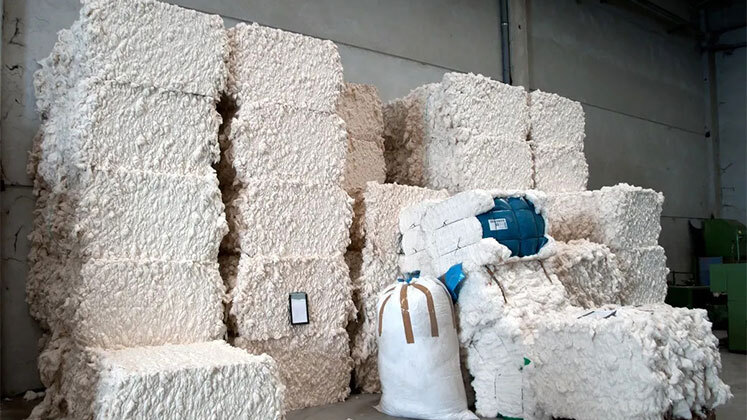
The Indian government’s decision to eliminate customs duty on extra-long staple (ELS) cotton — a high-quality grade of fibre crucial for premium textiles — is expected to bolster the competitiveness of the country’s textile exports, according to the Cotton Association of India (CAI).
Under a recent policy change, the government moved ELS cotton into the First Schedule of the customs tariff, effectively reducing import duty on this specific grade of fibre to 0%. The move aligns with industry demands for better access to raw materials and comes amid broader efforts to strengthen export performance in the face of evolving global trade conditions.
CAI representatives noted that the removal of import duties on ELS cotton should reduce raw material costs for domestic spinners and textile manufacturers that rely on this premium input, thereby enhancing the price competitiveness of their products in export markets. The association described the duty change as a “positive and forward-looking development” likely to improve market access for Indian textiles internationally.
Industry analysts said the duty exemption complements other government measures to support the textile sector, such as the extension of a broader cotton import duty exemption until the end of December 2025. That broader exemption was aimed at mitigating the impact of steep tariffs imposed by the United States on Indian apparel exports and easing pressure on raw material supplies.
Extra-long staple cotton — typically with fibre length exceeding 32 mm — is prized for producing fine counts and high-end fabrics. Domestic production of such cotton has historically been limited relative to demand, forcing Indian mills to import from suppliers in Australia, Egypt and other countries. The duty removal therefore addresses a long-standing industry concern about cost competitiveness and supply chain security.
Textile exporters and trade bodies have welcomed the policy change, saying it should help shore up export growth at a time when Indian garment and textile shipments face strong competition from other manufacturing hubs.