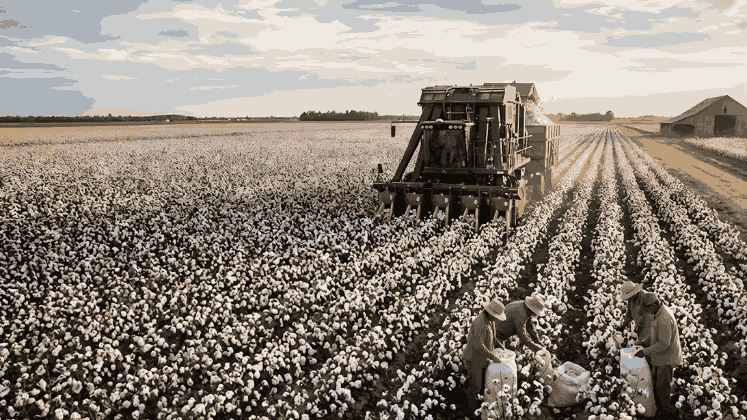
The Ministry of Textiles is set to receive an allocation of approximately Rs. 1,100 crore (US $ 122 million) from the Government of India’s new Cotton Productivity Mission, a move aimed at strengthening the country’s textile value chain, industry sources have indicated. The allocation represents more than 20% of the mission’s overall proposed budget of around Rs. 6,000 crore (US $ 668 million).
The funding stems from the five-year Mission for Cotton Productivity, announced in the Union Budget 2025–26 to address declining cotton output and quality in India, with the ambition of revitalising the nation’s textile sector. Under the scheme, the bulk of the total outlay is being directed to agencies involved in agricultural research and production, but the textiles ministry has negotiated to secure a significant share for post-harvest and processing activities.
According to officials familiar with the discussions, the ministry will use the funds to modernise ginning and pressing facilities, improve lint quality controls and enhance the handling of cotton bales to ensure raw material of higher quality reaches textile mills. These steps are intended to reduce contamination and inefficiencies that currently undermine competitiveness in both domestic and export markets.
Observers note that India’s cotton production has fallen for several consecutive seasons, with yields per hectare significantly below global averages—factors that have compounded pressure on raw material supplies for the textile industry. The mission’s proponents argue that investment in post-harvest infrastructure is critical to reversing this trend and reducing dependence on imported cotton.
Implementation of the mission and release of funds remain subject to final Cabinet approval, which has been delayed since the scheme was first announced. Government representatives have underscored the need for continued inter-ministerial coordination to bring the programme into effect.
The mission itself is part of a broader government strategy to improve cotton productivity, encourage the cultivation of higher-value varieties including extra-long staple cotton, and bolster the competitiveness of India’s textile exports.