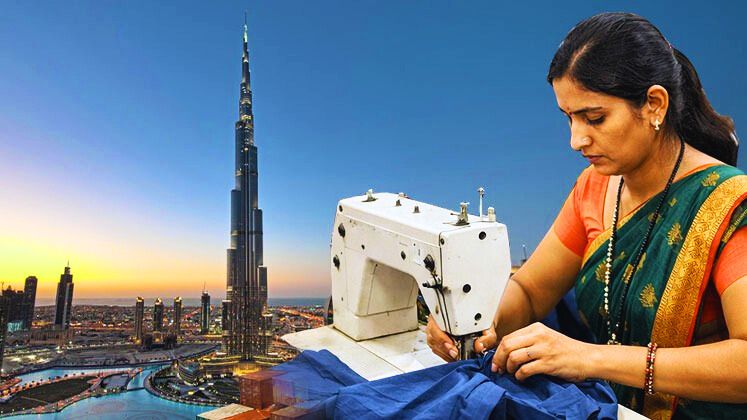
The recent tensions that have escalated in the Middle East have virtually halted India’s access to the GCC market. The Gulf Cooperation Council (GCC) — comprising Saudi Arabia, the United Arab Emirates (UAE), Oman, Qatar, Bahrain and Kuwait — remains a key trade and economic partner for India, particularly for the apparel sector. India’s apparel exports to the GCC stood at US $ 1.79 billion in 2024–25.
Within the bloc, the UAE is India’s largest trading partner in apparel, with bilateral trade valued at US $ 1.22 billion in FY 2024–25, followed by Saudi Arabia at US $ 360.11 million. The GCC region is also a significant source of foreign direct investment into India, with cumulative inflows of approximately US $ 31 billion between April 2000 and September 2025.
The continued conflict could also threaten India’s remittance from the Gulf. In FY ’25, India continued to lead global remittances, with total inflows reaching a record US $ 135.46 billion. The Gulf contributed around 38% of the total remittances with the UAE accounting for 19.2%. With over 8.5 to 9 million Indian expats, the GCC is a primary destination for Indian labour, constituting roughly 30% of the region’s total expatriate workforce.
Under normal circumstances, shipping timelines between India’s western ports — including Nhava Sheva, Mundra and Kandla — and key GCC ports such as Jebel Ali, Dammam and Hamad typically range between three and seven days. Any sustained disruption to maritime routes in the region would therefore have a direct bearing on established trade flows.
Shipping companies have also raised freight charges sharply. Some have increased rates by US $ 1,500 to US $ 2,000 per container from the earlier US $ 200–US $ 250 range. Maersk has reportedly increased rates by nearly US $ 1,700 per container to West Asia and beyond, while CMA CGM has raised rates by US $ 2,000 to US $ 3,000 per container.
Vinod Thapar, Chairman of the Knitwear Club in Ludhiana, stated that the Middle East is among the most important overseas markets for knitwear products manufactured in the city. He observed that a substantial share of Ludhiana’s garments is supplied to Middle Eastern countries and that current tensions had led buyers to adopt a cautious stance, weakening overall trade sentiment. He added that the industry had been anticipating improved demand from Europe while maintaining strong supply linkages with Middle Eastern nations, but the prevailing uncertainty had affected order flows and shipment schedules.
Separately, Dr A. Sakthivel, Chairman of the Apparel Export Promotion Council (AEPC), has written to the Secretary of the Ministry of Civil Aviation, requesting a waiver of demurrage charges on export cargo affected by flight disruptions linked to the crisis.
Under existing tariff structures, demurrage charges are levied when cargo remains at terminal facilities beyond the stipulated free period. However, Dr Sakthivel stated that the current disruptions constituted exceptional and unavoidable circumstances in the global air logistics chain. He observed that imposing demurrage charges in such conditions would impose an undue financial burden on exporters already grappling with shipment delays, contractual uncertainties and volatile market conditions.