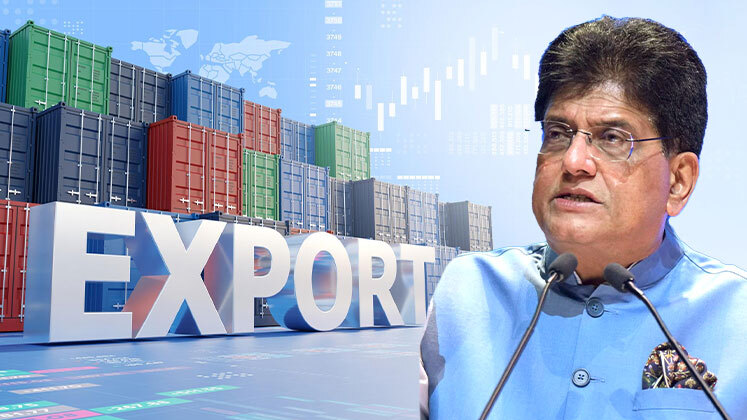
Commerce and Industry Minister Piyush Goyal has urged Indian manufacturers to prioritise quality as the country seeks to position itself as a developed economy, leveraging a series of recently concluded free trade agreements (FTAs).
Addressing the first National Quality Conclave, organised by the Department for Promotion of Industry and Internal Trade in partnership with the Quality Council of India, Goyal outlined a five-pillar action agenda aimed at institutionalising quality standards across sectors.
According to the minister, the agenda includes the implementation of strict standard operating procedures with robust compliance mechanisms; focused skilling and re-skilling of the workforce to reduce wastage and improve productivity, particularly in labour-intensive sectors such as textiles; systematic gap analysis to enhance global competitiveness; streamlining of testing and certification systems to reduce costs and delays; and the development of shared, modern testing infrastructure across manufacturing clusters.
Goyal stated that Indian goods and services must be globally recognised as a guarantee of quality. He said the ambition was for ‘Brand India’ to be synonymous with high standards, adding that any product made, designed or serviced from India should automatically reflect the highest levels of quality.
The minister linked the quality push to India’s long-term economic ambitions, stating that the country’s aspiration to become a US $ 30–35 trillion economy by 2047 rests on three pillars: zero defect (quality), zero effect (sustainability) and equitable opportunity (inclusivity).
He further observed that India’s US $ 2 trillion export target — comprising US $ 1 trillion in merchandise exports and US $ 1 trillion in services over the next six to seven years — would only be achievable through uncompromising quality standards.
Goyal noted that the government has expanded trade ties through high-quality FTAs with 38 developed economies over the past three to three-and-a-half years. He said nine agreements concluded during this period now cover nearly two-thirds of global GDP and trade, offering Indian businesses access to high per capita income markets.
He added that these agreements create significant opportunities for sectors including textiles, leather, footwear and pharmaceuticals, provided Indian products consistently meet global benchmarks.