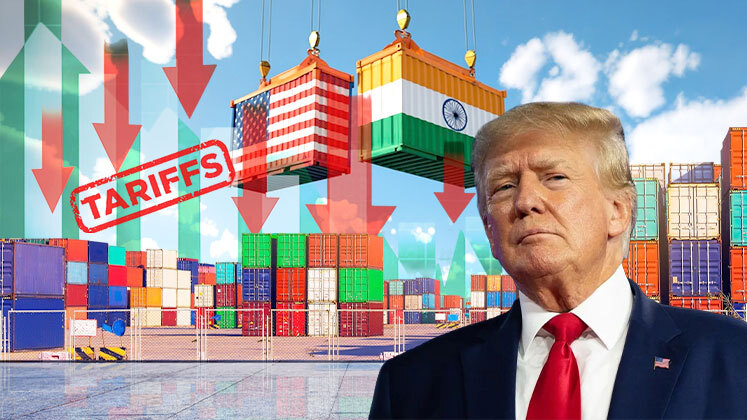
Countries with trade agreements with the United States, including India, will see tariff rates reduced to 10% under a new proclamation signed by US President Donald Trump, according to White House officials.
Officials stated that the revised 10% ad valorem tariff would remain in force for 150 days and would take effect from 12:01 a.m. Eastern Standard Time on 24th February. The updated measure applies to goods previously subject to higher reciprocal tariffs.
The clarification follows a 6–3 ruling by the Supreme Court of the United States, which struck down the administration’s earlier global tariff regime. The majority held that the statute relied upon by the administration did not authorise the President to impose the tariffs in question, thereby invalidating the unilateral measures introduced against multiple countries. The court did not rule on whether affected parties would be eligible for refunds of duties already paid.
The decision has compelled a recalibration of US trade policy. The revised framework is expected to apply uniformly to countries with trade agreements in place with Washington.
India, which had been subject to a 25% reciprocal tariff under the previous regime, is among the beneficiaries of the new arrangement. Indian government sources confirmed that the tariff on Indian goods would now be reduced directly from 25% to 10%. An earlier proposal to lower the rate to 18% had not been formally notified.
President Trump criticised the Supreme Court’s ruling, describing the justices as a “disgrace to the nation” and alleging that they had been influenced by foreign interests and small political movements.
The ruling carries wider implications for executive authority in trade policy and may reshape the legal boundaries governing future tariff actions.
Ashwin Chandran, Chairman of the Confederation of Indian Textile Industry (CITI), stated that the organisation was analysing the implications of the latest developments for India’s textile and apparel exports. He noted that the events of 20th February 2026 had introduced fresh uncertainty and that greater clarity from authorities — particularly regarding the status of terms agreed under the interim trade arrangement between India and the United States — would be helpful. He added that the United States remains the single largest market for India’s textile and apparel exports.