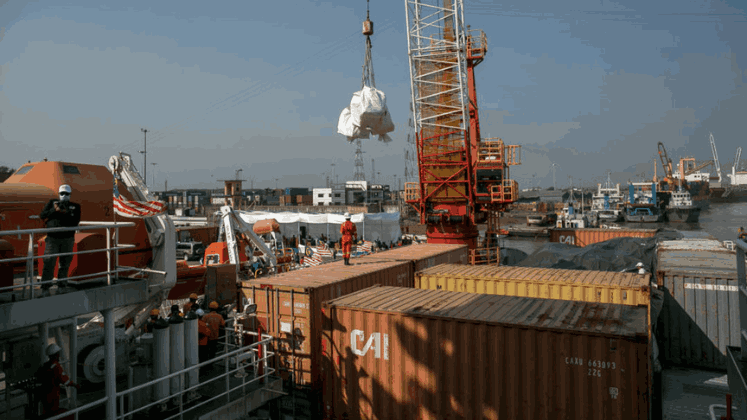
Imports posted only a modest recovery in the first five months of the current fiscal year as businesses remained cautious in the face of political uncertainty, weak demand and persistent stress in the banking sector.
Bangladesh Bank data showed that the opening of letters of credit (LCs) increased by 4.5% to US $ 29.69 billion during July–November of FY ’26, compared with US $ 28.4 billion in the same period of the previous year.
Bankers said the slow growth reflects a wait-and-see stance by importers as political activities intensified ahead of the national election scheduled for 12th February 2026. While overall economic conditions have improved slightly from last year’s disruption, they said the recovery remains fragile.
Businesses continue to face tight liquidity in the banking system, elevated borrowing costs and uncertainty over policy direction. Although relative stability in the dollar market has eased immediate pressures, it has not been sufficient to restore confidence for a strong rebound in imports.
Import activity had declined sharply in mid-2024 amid a student-led movement that eventually led to the fall of the Sheikh Hasina government in August. The unrest disrupted supply chains, delayed payments and exacerbated dollar shortages, forcing many businesses to suspend procurement. Analysts said the current uptick largely reflects a normalisation from that low base rather than a broad-based recovery.
LC openings for industrial raw materials edged up by just 0.42% to US $ 10.29 billion during July–November, indicating that factories are increasing production cautiously. Many manufacturers are still operating below capacity due to subdued domestic demand and limited access to working capital.
By contrast, LC openings for capital machinery rose sharply by 32.22% to US $ 911 million from US $ 690 million a year earlier. Economists said some firms are resuming previously delayed investment decisions, particularly in energy-efficient equipment and replacement machinery, but cautioned that this does not yet point to a sustained investment cycle.
LC openings for intermediate goods increased marginally by 1.95% to US $ 1.74 billion over the period.
LC settlements declined by 0.63% to US $ 27.94 billion during July–November, compared with US $ 28.11 billion a year earlier. Settlements for capital machinery, intermediate goods and consumer goods fell, while payments for industrial raw materials rose slightly, suggesting that many importers are still deferring shipments.
Bangladesh’s foreign exchange reserves rose to US $ 28.11 billion by December 24, 2025, under International Monetary Fund calculation standards. However, higher import costs continue to influence business decisions.
The interbank exchange rate rose to Tk 122 per dollar in August 2025 from Tk 106 a year earlier and has remained at that level for about nine months. While the stability has aided planning, the elevated rate has increased import bills and debt servicing costs, reinforcing caution across the business community.