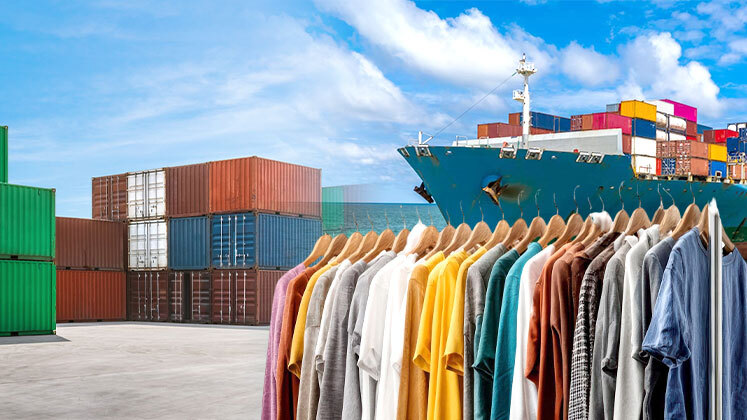
The Union government has announced a set of relaxations for exporters to help them meet compliance obligations under key export promotion schemes amid ongoing geopolitical disruptions affecting global shipping routes and supply chains.
In a public notice, the Directorate General of Foreign Trade (DGFT) stated that authorisations under the Advance Authorisation and Export Promotion Capital Goods (EPCG) schemes that were due to expire between 1st March and 31st May 2026 would receive an automatic extension. The extension will be granted without the payment of a composition fee.
The move comes as exporters continue to face logistical challenges in shipping goods to West Asia due to the ongoing conflict in the region, which has disrupted major maritime routes and supply chains.
In a statement, the Ministry of Commerce and Industry said the decision was intended to support exporters navigating temporary disruptions in global trade. The ministry stated that the step reflected the government’s continued commitment to supporting exporters and ensuring that short-term global disruptions do not adversely affect India’s export performance or compliance requirements under export promotion schemes.
Under the EPCG scheme, domestic manufacturers are permitted to import capital goods, including machinery, duty-free, provided they fulfil specified export obligations over a defined period.
According to the DGFT, the newly announced relaxation is in addition to the extension facility already available under the Foreign Trade Policy, which typically requires exporters to pay a composition fee for extending authorisations.
Ajay Sahai, Director General of the Federation of Indian Export Organisations (FIEO), welcomed the decision. He said the government’s move was timely and would provide much-needed relief to exporters facing operational challenges due to disruptions in global shipping routes.
Industry observers noted that the measure could help exporters maintain compliance with export obligations while navigating delays and uncertainty caused by the ongoing geopolitical situation.