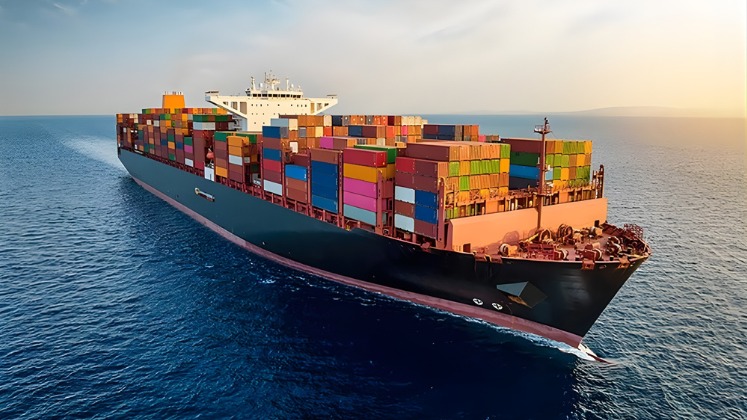
Bangladesh Shipping Corporation (BSC) has reported the highest net profit in its 54-year history, recording Taka 306.56 crore in the 2024–25 financial year, supported by strong operating income and disciplined cost management.
The results were disclosed at the state-owned shipping company’s 48th annual general meeting, held on Sunday at the Officers’ Club in Chattogram. The meeting was chaired by Brigadier General (retd) M Shakhawat Hossain, Adviser to the Ministry of Shipping and Chairman of the BSC board.
Presenting the annual performance report, BSC Managing Director Commodore Mahmudul Malek said the corporation earned Taka 590.98 crore from operations during the 2024–25 fiscal year, while income from other sources stood at Taka 207.30 crore. He said total income for the year amounted to Taka 798.28 crore.
He added that operating costs were Taka 289.92 crore, while administrative and financial expenses totalled Taka 126.45 crore, taking overall expenditure to Taka 416.27 crore. After tax adjustments, he said, the company posted a net profit of Taka 306.56 crore.
Comparing the results with the previous year, the managing director said that in 2023–24 BSC generated total income of Taka 596.18 crore against expenditure of Taka 311.59 crore, resulting in a net profit of Taka 249.69 crore.
Outlining the company’s future strategy, he said BSC was pursuing short-, medium- and long-term plans to expand its commercial fleet in line with national development priorities, the Sustainable Development Goals and the blue economy agenda, with the objective of becoming a self-reliant and internationally competitive shipping company.
He added that, to strengthen energy security and ensure uninterrupted supply chains, BSC plans to acquire two crude oil mother tankers with a capacity of 114,000 tonnes each and two bulk carrier mother vessels of 81,500 tonnes each under a government-to-government framework.
The managing director also said the corporation intends to acquire 12 cellular container vessels, six of which are currently being built with support from the Asian Infrastructure Investment Bank, to meet growing global demand.