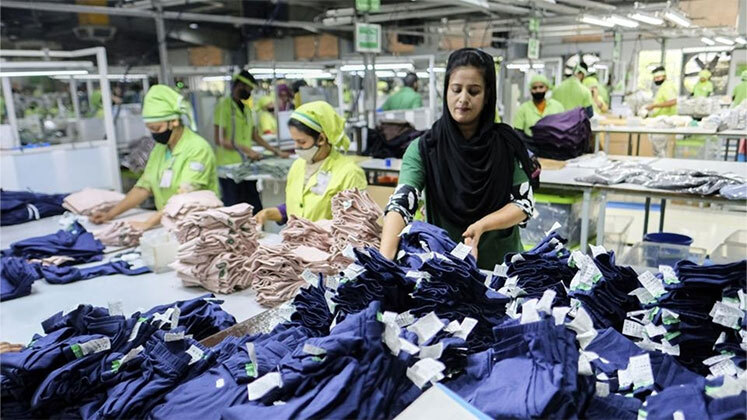
Bangladesh’s readymade garment (RMG) exports to non-traditional markets declined by 3.39% year on year between July and November of FY 2025–26, signalling mounting challenges in demand recovery, market positioning and policy support, according to official export data.
Non-traditional destinations—excluding the United States, Canada, the United Kingdom and the European Union—account for around 16% of Bangladesh’s total garment exports and are seen as critical to reducing the country’s heavy dependence on established markets. However, data from the Export Promotion Bureau (EPB) show sharper declines in several key alternative markets, underscoring intensifying competition and structural weaknesses in Bangladesh’s diversification strategy.
Australia, the country’s largest non-traditional market, recorded a 10% year-on-year fall in RMG imports from Bangladesh to US $ 313 million during the five-month period. Exports to India dropped by more than 8%, with shipments declining by US $ 26 million to US $ 298 million. Other major markets also saw steep contractions, including South Korea (down 12%), Mexico (16%), Turkey (25%) and Russia (23%).
Industry sources attributed the downturn to weak institutional marketing efforts, subdued global consumer demand, limited product diversification tailored to market-specific needs and a reduction in government export incentives for new destinations.
Shehab Udduza Chowdhury, Vice President of the Bangladesh Garment Manufacturers and Exporters Association (BGMEA), said overall export performance remained under pressure, with non-traditional markets facing deeper challenges. He also expressed concern over the effectiveness of commercial wings at Bangladeshi missions abroad, saying they had underperformed in facilitating market access and buyer engagement.
By contrast, traditional markets delivered mixed but relatively stronger results over the same period. Garment exports to the United States, Bangladesh’s largest apparel destination, rose 3% year on year to US $ 3.22 billion. Shipments to Canada increased by 6.51%, while exports to the UK grew by 3%, reflecting steady demand from value-focused retailers.
Trade analysts warned that as global apparel sourcing becomes more competitive and fragmented, Bangladesh risks losing ground in non-traditional markets without renewed policy incentives, market-specific product development and stronger overseas commercial diplomacy.