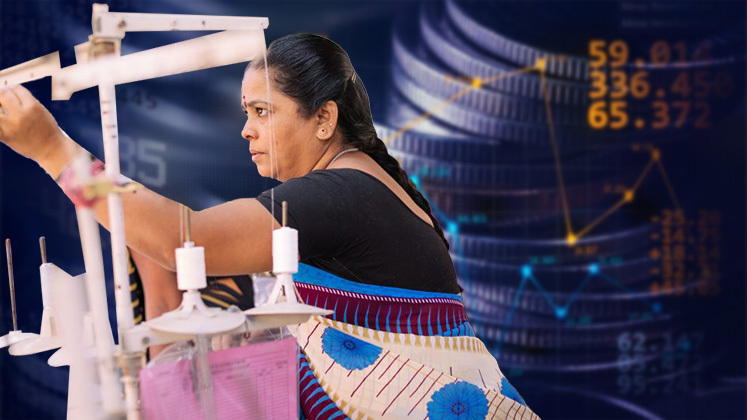
Gujarat has significantly increased financial allocation for the textile sector, raising the outlay under the Development of Textile Industry scheme to Rs. 2,755 crore (US $ 302 million) in the State Budget for fiscal year 2026–27.
The enhanced allocation, announced by State Finance Minister Kanubhai Desai while presenting the Budget in the Legislative Assembly on Wednesday, marks a notable rise from Rs. 2,000 crore (US $ 219 million) in 2025–26 and Rs. 2,036.47 crore (US $ 223 million) in 2024–25. The year-on-year increase underscores the State Government’s continued focus on consolidating Gujarat’s leadership in textile manufacturing and strengthening export competitiveness, particularly among micro, small and medium enterprises (MSMEs).
The Development of Textile Industry scheme is expected to support capacity expansion, technology upgradation and fresh investment across the textile value chain. The higher subsidy-driven outlay reflects an intensified push to enhance industrial infrastructure and scale within the sector.
Beyond large-scale industry, the Budget also sustains financial provisions for cottage industries, handloom and small-scale textile ecosystems. These measures include grants, subsidies and institutional assistance covering cooperative manufacturing models, skill development, research support and export facilitation for smaller producers.
Financial assistance to the Gujarat State Handicraft Development Corporation has been increased to Rs. 48.05 crore (US $ 5.28 million) for 2026–27, up from Rs. 41.86 crore (US $ 4.60 million) in the previous year. The allocation is aimed at improving market access and strengthening institutional support mechanisms. Additionally, Rs. 23 crore (US $ 2.52 million) has been earmarked for design competitions, exhibitions and promotional initiatives to foster product innovation and enhance visibility within the handicrafts segment.
To further support export-oriented industries, including textiles and apparel, the Budget proposes the establishment of the Gujarat State Export Promotion Council with an allocation of Rs. 5.90 crore (US $ 648,000). The council is intended to facilitate export development and broaden market access, particularly for MSME producers. Provisions enabling handloom and handicraft stakeholders to leverage e-commerce platforms signal an increasing emphasis on digital market integration and diversification.
Overall, the Budget outlines a dual strategy: scaling industrial textile investment through an expanded core allocation while reinforcing traditional and MSME segments via targeted support, export facilitation and digital initiatives.
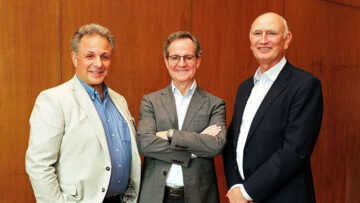
Ashish Gujarati, former President of the Southern Gujarat Chamber of Commerce and Industry (SGCCI), stated that the increase in textile allocation from Rs. 2,000 crore (US $ 219 million) to Rs. 2,755 crore (US $ 302 million) demonstrated the State’s continued commitment to implementing the Gujarat Textile Policy and supporting sectoral growth. He further observed that the proposed formation of the Gujarat Export Promotion Council represented a positive step that was expected to facilitate higher exports of MSME products by strengthening market access and institutional support.