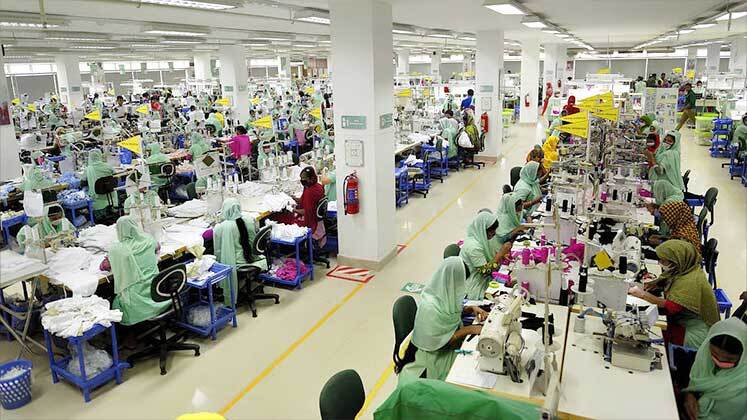
Bangladesh’s textile millers and clothing accessory manufacturers have raised strong objections to a government plan to amend the import policy to allow full import of raw materials for export-oriented apparel under the free-of-charge (FoC) system.
At present, exporters may import up to 50% of required raw materials under FoC, through which international buyers supply fabrics, accessories and other inputs, while local manufacturers are paid only for cutting and making garments. The proposed change aims to reduce costs and support higher-end exports.
Industry leaders told Commerce Adviser Sk Bashir Uddin during a meeting at the Ministry on Tuesday that the amendment could severely undermine the domestic textile and accessories sectors. They argued that the primary textile industry—which has attracted about US$23 billion in investment and supports yarn, fabrics, dyeing, washing and finishing operations—would face significant disruption.
In a statement, Bangladesh Textile Mills Association (BTMA) President Showkat Aziz Russell said the amendment “would effectively destroy the primary textile sector.” He warned that allowing unrestricted FoC imports would reduce demand for locally produced raw materials and weaken the supply chain underpinning the country’s garment industry.
Bangladesh Garments Accessories and Packaging Manufacturers and Exporters Association (BGAPMEA) President Md. Shahriar also cautioned in a separate statement that the Tk 40,000 crore packaging and accessories sector would be “severely affected” by the policy shift.
Exporters, however, argue that FoC is simpler and faster, and believe Bangladesh’s strong manufacturing capacity and skilled workforce would attract larger orders from global brands if the import cap were removed.
Nearly 95% of clothing exports currently use standard letters of credit (LCs), with FoC adoption remaining low due to administrative hurdles and import restrictions. In November, Bangladesh Garment Manufacturers and Exporters Association (BGMEA) Vice President Md. Shehab Udduza Chowdhury told The Daily Star that the revised FoC system could generate an additional US$5 billion in export earnings in its first year and up to US$10 billion in the second year.
FoC import limits were previously set at 33% before being raised to 50%. Despite this, exporters use the facility for less than 5% of shipments due to strict regulations and long-standing issues at Chattogram customs.