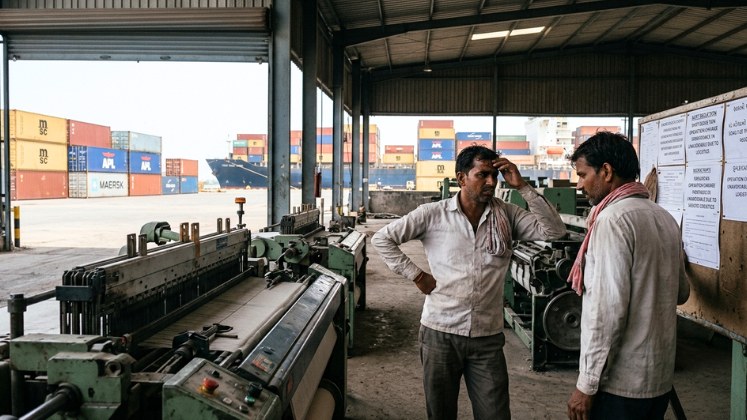
Escalating crude oil prices and disrupted supply chains linked to the ongoing West Asia conflict have pushed Surat’s textile industry into crisis, forcing mills to scale back operations and intensifying distress among workers.
At the heart of the disruption is Surat’s vast textile hub, where rising input costs and supply bottlenecks have severely undermined production viability. Industry representatives from the South Gujarat Textile Processors Association stated that the surge in global crude prices has sharply increased the cost of key inputs, including yarn and coal, while also destabilising supply chains.
Coal, a critical resource for textile processing, has become both costlier and harder to procure, with mills reportedly holding only 10 to 20 days of stock. Industry observers warn that, should consumption continue at current levels, an energy shortage could become imminent.
Under mounting financial pressure, textile processors have opted to suspend operations for two days each week in an effort to conserve resources and limit losses. The move reflects the severity of the crisis in one of Gujarat’s most significant industrial sectors, where operating conditions have become increasingly unviable amid weak demand and elevated costs.
According to Jitu Vakharia, president of the association, the rise in grey cloth prices has led to a slowdown in orders from buyers, leaving mills with insufficient work. He stated that, in the prevailing circumstances, running the mills had become economically unviable and loss-making, compelling the industry to adopt temporary weekly shutdowns.
The impact on employment has been substantial. Surat’s textile ecosystem, comprising an estimated 400 to 500 mills, supports nearly 300,000 workers directly. As operations contract, wage losses are mounting, and labour uncertainty is rising across the city.
Signs of distress are already visible, with a growing number of workers reportedly leaving Surat for their hometowns. Industry stakeholders have cautioned that a prolonged disruption could lead to labour shortages in the future, potentially hampering recovery when demand rebounds.
The effects of the geopolitical crisis are also being felt beyond textiles. In Gujarat’s ceramic hub of Morbi, export activity has been severely disrupted. Following earlier gas shortages that had already forced the closure of hundreds of units, fresh logistical challenges have emerged due to port disruptions across the Gulf region.
Exports to key markets have been affected as operations at ports in Dubai, Oman, Sharjah, Qatar and Kuwait face interruptions. Containers carrying ceramic goods are reportedly stranded mid-transit, constraining cash flows and halting export momentum for manufacturers.
The unfolding situation points to a broader industrial slowdown across Gujarat, as global geopolitical tensions intersect with local production realities. Analysts suggest that the state’s manufacturing backbone is now under significant strain, raising concerns over the durability of its industrial growth in the near term.