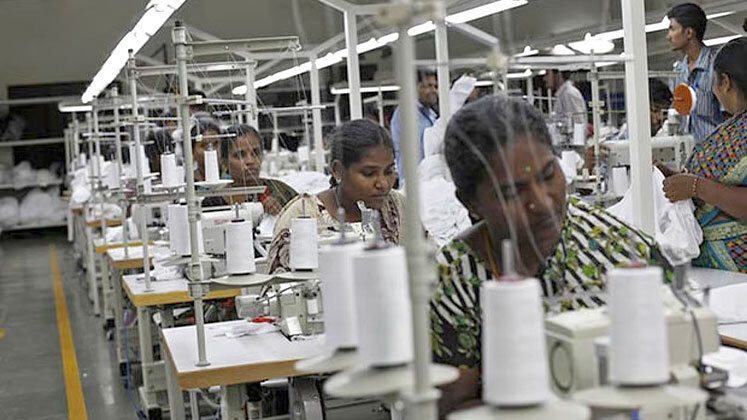
Textile exporters in Tamil Nadu’s Karur cluster have begun operating on reduced four-day and five-day work weeks as a cost-cutting measure, following the impact of sharply higher tariffs imposed by the United States on Indian goods.
The Karur cluster, a major hub for home textile exports, accounts for a significant share of India’s outbound shipments of products such as bed linen, table covers, kitchen cloths, mats and sofa covers. Industry sources estimate the cluster’s annual manufacturing value at around Rs. 9,000 crore (US $ 1 billion), of which exports account for approximately Rs. 6,000 crore (US $ 667 million), with the United States and the European Union being the primary markets. The sector provides direct employment to nearly two lakh workers.
Exporters began to feel the impact after the United States introduced tariffs that were around 50% higher from August. Soon after the revised tariff regime came into effect on August 27, US-based buyers sought steep discounts on orders that had been placed earlier. Several buyers opted to cancel orders altogether. In an effort to ensure continuity of operations, many exporters offered special discounts, but fresh orders largely dried up from September onwards.
With order inflows sharply reduced, exporters were forced to scale down production and introduce partial lay-offs. Traditionally, textile units in Karur operate six days a week, with Sundays as the weekly holiday. However, declining demand from the US has compelled many units to limit operations to five days, while some have reduced production further to just four days a week. This has resulted in workers losing one to two days’ wages each week.
P.Gopalakrishnan, president of the Karur Textile Manufacturers Association, said exporters preferred to run their factories at optimal capacity but were constrained by weak export demand, particularly from the US market. He noted that while some companies were operating for five days a week, others had chosen to limit operations to Monday through Thursday. He added that exporters had managed to sustain operations over the past five months largely by executing earlier orders from the US, but fresh orders had been scarce during the second and third quarters of the current financial year.
According to industry representatives, business activity in the US had only recently resumed after the Christmas holiday period, and the full impact of the higher tariffs was expected to become clearer in the final quarter of 2025–26.
Another exporter said a section of units had begun facing liquidity pressures, with many availing themselves of working capital loans to stay afloat. While interventions by the Union government following the tariff hike had helped improve short-term working capital management, these measures were unlikely to provide a sustainable solution.
Gopalakrishnan said the Union government needed to expedite the conclusion of an India–US trade agreement to safeguard operations, protect employment and maintain global competitiveness. Without such an agreement, he warned, exporters risked losing their buyer base in the long term.