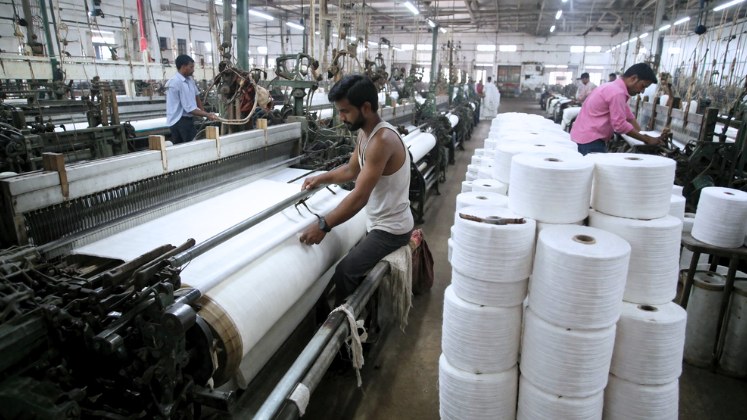
Textile weavers in Surat have voiced growing concern over persistently high yarn prices, stating that there has been no meaningful correction despite the Centre’s decision to exempt 40 petrochemical products from customs duty.
Industry participants in the weaving segment indicated that yarn manufacturers tend to increase prices swiftly in response to rising input costs but are considerably slower to reduce rates when raw material prices decline. They warned that the sustained elevation in yarn costs has significantly eroded production margins and disrupted operations across the sector.
A weaving unit owner observed that yarn manufacturers had been quick to raise prices but slow to implement reductions when raw material costs softened. The owner added that, particularly in adverse market conditions, yarn prices ought to be corrected more promptly.
Yarn manufacturers, however, have rejected the criticism, maintaining that the customs duty exemption alone does not determine yarn pricing. They stated that prices are influenced by a range of variables, including fluctuations in the US dollar and broader global geopolitical developments.
A yarn manufacturer explained that price adjustments were aligned with rapidly evolving market dynamics, noting that raw material costs and currency movements now change at a much faster pace than in the past. The manufacturer added that yarn producers themselves were operating under compressed margins due to this volatility.
Manufacturers further claimed that most weaving units continue to procure yarn at prevailing market rates and that there has been no widespread resistance from buyers.
Meanwhile, operational challenges in Surat’s textile hub appear to be intensifying. Several weaving units have reportedly reduced production, with some operating only a single shift or remaining shut for two days each week. Industry leaders indicated that units facing acute financial stress have already curtailed output.
They added that weak demand for textile products has compounded the situation, creating a dual pressure of rising input costs and subdued market conditions. According to industry stakeholders, this combination has forced many weavers to scale down operations in order to manage costs.
The ongoing developments have raised concerns within the local textile ecosystem, with weavers cautioning that continued pressure on production economics and labour conditions could further impact output in the coming weeks.