Once just simple fasteners, buttons have grown into key design elements. They can transform a garment, add unexpected flair and make even the smallest touches in a design stand out.
As these elements hog the spotlight, their demand is also increasing, and to tap this market, D&G Buttons has set up a new 30,000-square-foot facility in Kolkata. Part of D&G Global Holdings Ltd., the company makes everything from jeans buttons and snaps to rivets, buckles, handbag clips and decorative hardware.
What makes this expansion striking is that it comes at a time when the Indian fashion sector is grappling with US tariffs and subdued global demand. The investment highlights the confidence trims manufacturers have in the strength of the Indian fashion industry.
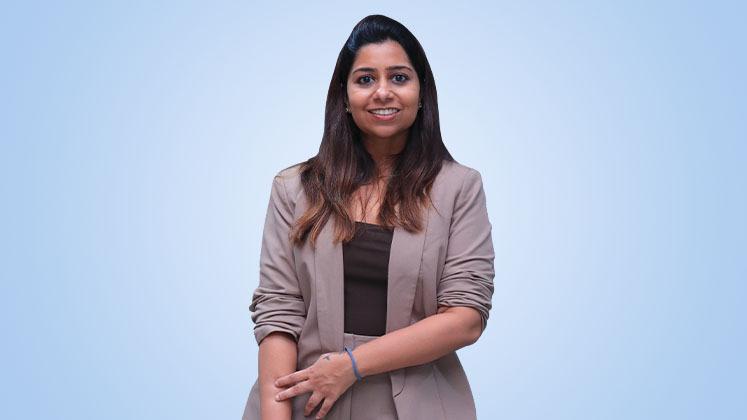
“The global trade environment is definitely challenging but that’s also creating opportunities for India. Many international buyers are looking to diversify sourcing and build stronger supply chains within India. On top of that, our domestic market remains quite strong,” said Sweta Saraf, Director, D&G Buttons.
Apparel Resources was invited to the Kolkata facility to witness the expansion firsthand and met Sweta. She explained how the new facility would reduce lead times, improve quality control, support smaller custom orders and expand product variety, giving brands the flexibility to respond faster to market trends and create more innovative collections.
US $ 11.4 billion
According to Cognitive Market Research, the global market for clothing buttons was valued at about US $ 7.2 billion in 2021. It is expected to reach around US $ 8.4 billion by the end of 2025 and grow to roughly US $ 11.4 billion by 2033. The market is projected to grow at a CAGR of 3.9% between 2025 and 2033.
AR: With the new Kolkata unit up and running, how will it make life easier for your clients?
Sweta Saraf: The Kolkata factory is a big step forward for us and for our clients. Right now, the unit is producing over 200,000 pieces a day across buttons, rivets, snaps and metal trims. This gives us the flexibility to handle larger volumes while maintaining our hallmark – quick turnaround, precision and consistent quality.
Our new set-up also allows us to support smaller custom orders, with minimum quantity being as low as 5,000 pieces. This gives designers and emerging brands the freedom to create limited-edition collections or experiment with finishes without worrying about quality.
We’re also focusing on reducing lead times. Currently, the full cycle from sampling to delivery takes 60-75 days, and as we settle in, our goal over the next two years is to bring lead times down to 30-35 days for new orders and just 10-12 days for urgent repeat orders.
The Kolkata unit was built for scalability. Its layout, utilities and machinery are designed so we can expand smoothly as demand grows, helping brands respond faster to market trends, deliver more innovative collections and maintain consistent quality at every stage.
AR: Is the Kolkata unit geared towards local demand, global orders or both?
Sweta Saraf: The Kolkata unit is built to serve both. Right now, about 80% of what we produce serves the Indian market, working with a wide network of leading apparel brands. The rest, around 20%, goes to export orders through our supplier networks and global buyers sourcing from India.
However, we expect export share to grow steadily. We are building long-term partnerships with international brands and manufacturers across Asia and beyond. Being in Kolkata also helps us logistically since we are closer to major export hubs like Bangladesh. That means faster, more cost-efficient deliveries for our global clients.
AR: How does the new factory keep quality consistent across different products? Can you give us a peek at your QC process?
Sweta Saraf: Quality has always been central to everything we do. We’ve set up a multi-stage quality control process that runs through every part of production, from moulding to plating and finishing. Our QC team is highly trained and follows global AQL standards.

We generate QC reports every 30 minutes, which helps us monitor production closely. Every step, from inspecting raw materials to final packing, follows a detailed checklist. Before dispatch, each product undergoes a final QC that includes corrosion and colour tests, checking pulling strength, attachment inspections and piece-by-piece manual checks.
Our in-house testing lab also performs all checks needed for OEKO-TEX and ISO compliance.
We even use advanced CNC and EDM systems for mould making to ensure accuracy and repeatability. Plating is done through barrel and tumbling methods to guarantee consistent coating and finish.
Having moulding, plating and testing all under one roof allows us to maintain tight control, deliver uniform quality and reduce lead times.
| “Our new set-up also allows us to support smaller custom orders, with minimum quantity being as low as 5,000 pieces. This gives designers and emerging brands the freedom to create limited-edition collections. Currently, the full cycle from sampling to delivery takes 60-75 days, and as we settle in, our goal over the next two years is to bring lead times down to 30-35 days for new orders and just 10-12 days for urgent repeat orders.” |
AR: What kind of button styles and finishes are brands loving these days?
Sweta Saraf: We’re seeing the strongest growth in snap buttons and other functional fasteners, mainly because of the boom in kidswear and athleisure. These categories put a lot of emphasis on comfort, safety and appearance and that’s changing the way fasteners are designed. There’s a clear shift towards nickel-free and hypoallergenic finishes, lightweight styles and custom-coloured platings that match today’s modern fabrics. We’re also seeing more demand for recyclable and corrosion-resistant coatings, which help improve both durability and sustainability, especially in activewear and children’s apparel.
We’ve started introducing nickel-free and eco-friendly coatings and are exploring recycled metal options as well. We’re also actively exploring non-metal alternatives such as polyester, resin and natural materials like corozo and coconut shell.
Jeans buttons, on the other hand, continue to have steady, reliable demand.
We’re witnessing strong demand for premium finishes like matte gold, gunmetal, brushed textures, antique metal and tonal coatings that blend seamlessly with fabrics. Identity-led branding is also growing, with brands asking for laser-engraved logos, monogrammed hardware and logo plates.
In kidswear, vibrant colour pops and enamel-filled buttons are popular, while denim and workwear labels prefer matte gunmetal and aged brass that develop character over time.
I would like to especially mention that our team partners closely with designers from the concept stage, offering digital mock-ups, 3D renders and sampling options before production.
AR: Are you seeing any new trends or requirements that are becoming critical for brands when selecting their suppliers?
Sweta Saraf: When it comes to getting brand nominations, it really comes down to trust and consistency. Brands want to know they can rely on us for the same high quality every single time. We make sure our supply is dependable, samples are delivered quickly and all documentation is clear. Providing technical support is also key because it helps our clients feel confident throughout the entire process. We’re also noticing that speed, transparency and sustainability have become top priorities for brands when choosing suppliers.
| “We generate QC reports every 30 minutes, which helps us monitor production closely. Every step, from inspecting raw materials to final packing, follows a detailed checklist. Before dispatch, each product undergoes a final QC that includes corrosion and colour tests, checking pulling strength, attachment inspections and piece-by-piece manual checks.” |
AR: How are you making your operations greener?
Sweta Saraf: Sustainability is something we take seriously at every step of our production. We’ve put an Effluent Treatment Plant in place to manage water responsibly throughout the plating process. We minimise water use wherever possible and all water that goes through the system is treated and purified before release to meet strict environmental standards.
Our next step is to convert the facility to solar energy, which will further reduce our carbon footprint.

While we don’t use recycled raw materials yet because consistent quality and strength are our top priorities, all metal scraps and production waste are sent to certified recycling vendors, so nothing goes to landfill and everything is reused responsibly.
We also work only with trusted suppliers in India and abroad who meet our quality and compliance standards.Every batch of metal—zinc, brass or alloy—is carefully checked for composition, hardness and plating adhesion before use.
From raw materials to finished products, we maintain full traceability. We regularly audit our suppliers to ensure everything meets our standards and our clients get consistent, reliable quality.