Threads may only be 1% of a garment’s cost, but if that 1% goes wrong, the entire piece can fail. Few companies understand this better than Madeira, a leading manufacturer of embroidery threads, stabilisers and accessories. The company with a manufacturing plant in Freiburg, Germany, annually produces enough embroidery thread to wrap around the Earth 750 times.
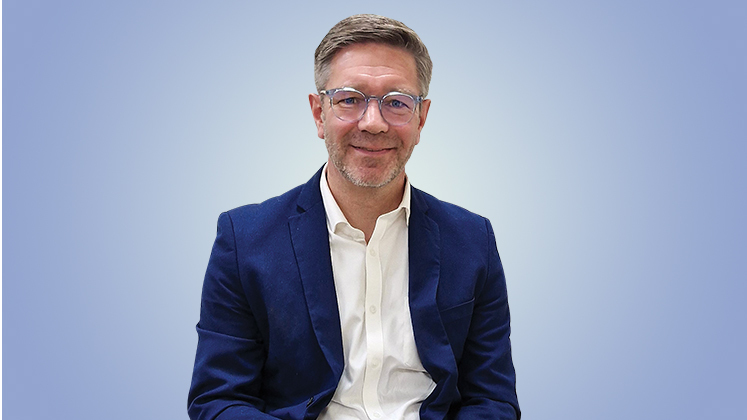
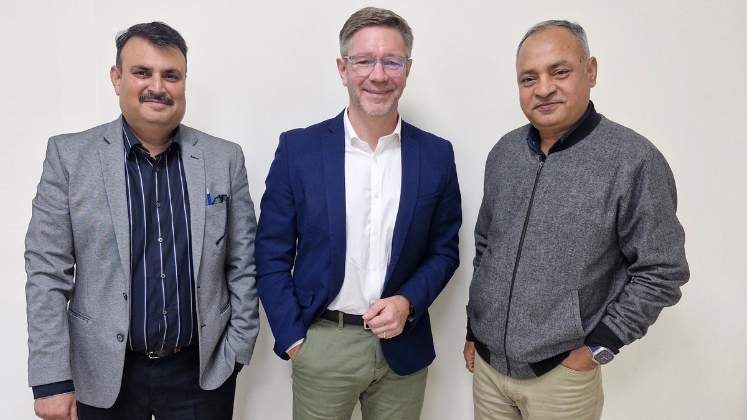
When Andreas Beihofer, Member of the Board, Madeira, recently visited India about a year- and-a-half into his role, Apparel Resources was invited to have a candid conversation with him. Andreas shared key insights into buyers’ demands and the forces shaping the embroidery thread market.
He said emerging categories like athleisure are now demanding thinner, lighter and more versatile threads that can handle stretch and movement without losing quality. Workwear, specifically heat and fire-resistant clothes on the other hand, continues to grow because global safety rules are only getting stricter.
Colour differentiation has become another battleground. Even though Madeira already offers many hues across a wide palette, some brands still request additional shades to stand out on the shelf. And sustainability, he admitted, is no longer a premium add-on. Recycled polyester is now expected at the same price as virgin, pushing suppliers to absorb the transition themselves. Andreas also spoke about everyday production challenges, noting that many issues are often blamed on the thread.
Taken together, the conversation painted an insightful picture of the thread industry. Here are the edited excerpts.
AR: What are your customers’ biggest priorities today and how have they changed in recent years?
Andreas Beihofer: The easy answer would be ‘price, price, price’. Customers are always conscious of budgets and margins in the industry are tight.
But beyond cost, other factors have become just as important
One of the biggest changes we’ve seen over the past few years is the expectation that suppliers know exactly what’s happening globally. Brands assume we already know where each of their products is being manufactured, whether production has moved from Indonesia to India or from India to Thailand and that we’ll be ready with the right product at the right place. They expect speed, readiness and the ability to ship immediately once the manufacturer places an order. Our answer is a worldwide service of product availability and shipment options from our network of entities and partners and their warehouses.
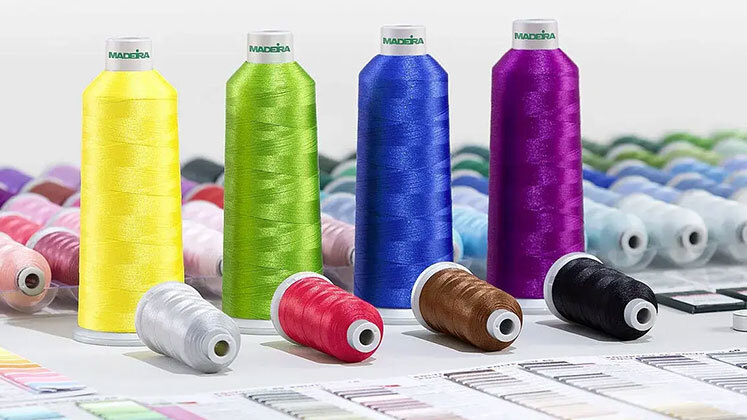
The second big shift is differentiation through colour. Large brands are increasingly focused on creating exclusive shades to stand out at retail. ‘Dye-to-match’ requests are growing and brands expect us to respond quickly with samples, approvals and full production. For instance, we recently received an order for 30 to 40 new colours, with new versions of the colour blue, even though we already offer dozens shades of blue, simply because the brand wanted its own unique tone.
AR: Outdoorwear, athleisure and performancewear are pushing fabric technology into new territory. What does that mean for embroidery and what kinds of innovations are becoming necessary as the industry evolves?
Andreas Beihofer: The shift to outdoor, athleisure and technical apparel has changed the rules of embroidery, making it much more demanding. For example, Tension has become critical – a fraction too tight can distort the fabric, too loose and the design loses precision. Needles matter just as much, as a standard needle can tear delicate technical knits. These garments also face sweat, sun, abrasion and repeated washing, so durability standards have risen. Stabilisation is equally important because technical fabrics often need customised backings or toppers to prevent shifting or distortion during stitching. Madeira’s polyester 60 and 75 embroidery threads are designed to handle these new materials while maintaining and improving the fine, detailed finish designers expect.
Beyond athleisure, hybrid applications such as combining printing and embroidery are emerging as a new challenge. For example, Coloreel machines feed a single yarn through a printer that applies colour exactly where needed according to the design file. Another approach applies colour after embroidery. Brother or Epson are offering this solution besides other brands in the market. But finding yarn that reliably absorbs and retains colour through washing, sweat and climate exposure remains a challenge.
Our R&D team is actively working with customers to develop yarns that meet these demanding systems.
| “The shift to outdoor, athleisure and technical apparel has changed the rules of embroidery. Tension has become critical, a fraction too tight can distort the fabric, too loose and the design loses precision. Needles matter just as much, as a standard needle can tear delicate technical knits.” |
AR: Workwear is booming globally. What trends are you noticing and how are you keeping up with the needs of this segment?
Andreas Beihofer: Workwear is one of the most stable markets for us and it’s still growing due to rising awareness and stringent compliance laws.
In many developing countries, these uniforms often serve a dual purpose – they’re worn both at work and at home. I’ve seen this in places like Mexico, Brazil and India. Companies typically provide two to four sets of work clothes a year and employees wear them outside of work as well. In a way, it becomes an extra benefit, almost like part of their compensation.
From a product perspective, it’s mostly polyester because it’s durable. Some companies might still use a bit of rayon, but polyester dominates, especially since the garments often need to withstand industrial washing.
AR: The smart textiles market is taking off. How do you see its growth and what are you doing to stay ahead?
Andreas Beihofer: No doubt, smart textiles is an interesting field of activity. Everyone is exploring sensors, conductivity and interactive capabilities and that’s where we’ve also been putting our energy.
In fact, we have developed a special thread called HC thread – a highly conductive embroidery thread designed for smart textiles, with a silver-plated filament for high electrical conductivity. It is used to create electronic functions in clothing such as for light, sound or heating applications and is skin-friendly, washable and optimised for easy use on embroidery machines.
However, many of these smart textile ideas, while very interesting, have not yet succeeded when it comes to mass production and practical, day-to-day usage.
| “For the majority of the market, recycled polyester is now expected as the standard, but at the same price as the old virgin version. Their mindset is basically, “Yes, I want recycled, but I won’t pay more for it.”” |
AR: Sustainability is on most brands’ radar these days, but are they willing to pay more for eco-friendly threads or is price still the deciding factor?
Andreas Beihofer: As I mentioned, margins are tight, so it’s hard to charge more for anything, even if it’s sustainable. We do have some customers who specifically ask for products like Sensa Green (made from TENCEL™ Lyocell fibres) or our ocean-recycled polyester threads and they are willing to pay a slight premium. But this group is still very small and mostly limited to brands focused on eco or niche products.
For the majority of the market, recycled polyester is now expected as the standard, but at the same price as the old virgin version. Their mindset is basically, “Yes, I want recycled, but I won’t pay more for it.”
That’s why we made the strategic decision early on to switch completely to recycled polyester instead of maintaining two separate inventories. We kept the same colours, same quality and same price, even though it cost us more initially. It was the right long-term choice.
AR: Can you walk us through the support you provide for troubleshooting embroidery problems?
Andreas Beihofer: Customers usually need help when embroidery malfunctions or when they suspect thread-related issues, like for example, colour bleeding. Often, customers assume that thread is at fault. We send replacements, but also investigate, since the thread is frequently fine or has trouble when used only in combination with inappropriate other materials.
We have a technical team in Germany that analyses such cases. Many issues come from things like switching to a cheaper under-thread, changing the backing or using a new chemical or heat process without realising it affects the embroidery. For instance, an oven used for a final process of treatment of the apparel is too hot, making embroidery look damaged or leads to other problems, though the thread originally was fine.
Our textile engineers in our own quality and product management department and external partner labs help identify whether the problem is due to fabric, heat, humidity, underthread or chemicals. This diagnostic support is something not many companies offer and it’s a big reason customers trust us.
We also help with practical embroidery issues. Customers send photos or samples and we guide them on settings, needles, tension or machine adjustments. We even can send engineers on-site for complex troubleshooting or large projects’ development activities.
AR: The US tariffs imposed on India has been a hot topic lately. From your perspective, how is it affecting the market and how are you handling this situation?
Andreas Beihofer: We see the current tariff situation as short term. It seems more like a political tool being used by the US administration right now. But we are confident that, as with other countries, an agreement between India and the US will eventually be reached. Our strategy has always been to work closely with companies focused on exports.
At the same time, we see tremendous potential in India’s domestic market. The population is huge and the middle-class is growing fast. What makes India stand out is its strong local fashion ecosystem. In many other emerging countries, the retail landscape is dominated almost entirely by international brands. India is different as it has both international names and a large, growing number of strong homegrown labels, building their own identities across westernwear and the vibrant ethnicwear segment.
If we can partner with these local brands, especially those focused on quality, we can grow together.