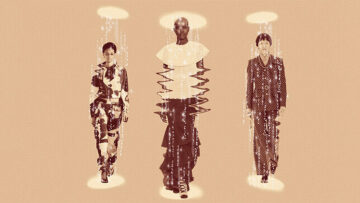
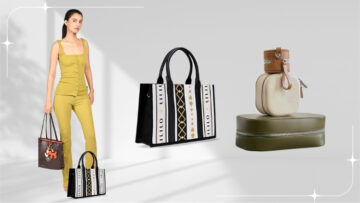
Embroidery adds a different touch to ordinary garments, and it makes the designs elegant and more luxurious. Time and again, brands have depended on handmade style to add that oomph factor to their clothing. However, times have changed, and it is not safe to take sanitisation lightly. Thus, will such an ancient tradition of handiwork take a back seat?

“India is known for its handwork and embroidery. The west has always been fascinated by our craftsmanship and has tried to incorporate the same in their designs, by collaborating with artisans. A hand-embroidered garment holds a special and high value in the consumers’ eyes. They appreciate the efforts of man hours that have taken to create this piece of art. Hand embroidery has successfully stood the test of time in spite of huge advancements in machinery and technology. Nothing can be matched when crafted with one’s own hands. The detailing, intricacy and the craft are not equivalent to machine embroidery. People are always drawn to handmade products, especially if it’s hand-embroidered, as it delivers quality, richness and timelessness value of the craft. Hand embroidery is an integral part of outfits in India and in the foreseeable future, and thankfully for our craftsmen, this craft seems to have a lot of demand,” designer Anjali Bhaskar of Samatvam fame mentions.

Samatvam means equilibrium, balance and equanimity. Launched in 2010 by Anjali, Samatvam is an established designer brand today and caters to individuals who appreciate the subtlety of glamour and intricate details. The designer chose the uncommon path of learning on the job, journeying through every minor detail, and in the process, she started worshipping the details, intricacies and handiwork. Anjali has an experience of more than 12 years in the fashion industry. Having started her career’s training under the likes of Shantanu Nikhil and Suneet Verma, she has gained in-depth knowledge of the fashion business.
Also Read: Is the pandemic hiking up the demand for everything organic?
Samatvam has been known to dress some of the top Bollywood celebrities including Sonam Kapoor, Taapsee Pannu, Ileana D’Cruz, Dia Mirza and Soha Ali Khan to name a few. The brand employs a lot of intricate hand embroidery styles in their collections by working closely with artisans.
Gaining foothold
A designer by profession, owner of a contemporary hand embroidery boutique, Kakoli Aarup Bhattacharjee operates her set-up from home. With the needle and her love for the thread, she has integrated her fertile imagination into embroidery designs. It wasn’t until 2019 that she finally formed her own label, Kakolisembroidery, offering a line of affordable embroidery work that won over customers’ hearts and became a success. Kakoli also sells on Etsy today, and given the plethora of her designs, she has been able to get specialised orders beyond borders too.

She loves telling stories through her handiwork, and embroidery for her is an expression. Highlighting on how COVID-19 is shaping the customer responses today for all businesses, Kakoli says, “People become your clients not only because of your stuff, but also because of how you treat them and the service offered to them. Every client should be given equal importance irrespective of the magnitude of the order received. With my respectful dealing with the clients, answering each and every query happily and maintaining ethical transparency, I have established a very strong relationship with them, as a result of which, they are in constant touch with me. The pandemic resulting into a lockdown situation, thus, could not be a deterrent in the enthusiastic response from my clients. My direct clients and brands alike did not stop from extending customised embroidery projects to me.”

Time for reinvention
Okhai retails handcrafted apparel and lifestyle products created by rural artisans from across India. Okhai products offer contemporary designs, all reasonably priced. Proceeds from sales work as remuneration for the artisans. Okhai’s mission is to encourage women from less privileged backgrounds to acquire new skills, to give them the self-confidence and self-esteem required to earn by their own industry and initiative, and to enable them to carry this newly discovered skill and confidence into the wider world. Okhai understands the rich culture and traditions that these rural communities are steeped in, and translates this heritage into products by pairing traditional art with contemporary designs and modern processes. Embroidered garments take a big pie of Okhai’s offering.

Kirti Poonia, Head, Okhai, when commenting on the future of embroidery in the post-pandemic world, mentions, “We have not started to reduce embroidery, as it’s important for us to engage women who are dependent on the craft. Having said that, customers are also supporting traditional Indian crafts, and hence, there is a market for these exquisite products. It’s not likely for embroidery to take a back seat, but it will definitely transform. For example, more home products are in demand, so we have made a collection of hand-embroidered table mats and aprons for all the new chefs out there.”

Kakoli shares the same opinion, “Every embroidery work really does tell a tale. As a buyer, you are investing in an artist’s passion and are ‘making something your own’ which is special. The delicate stitches of embroidery are finding their way into menswear too. Even doing floral embroideries across T-shirts, jumpers and cotton briefs add a value people can understand because they can see the work and efforts in the finished items. Embroidery will never take a back seat owing to the pandemic scare. It’s only a matter of time to overcome this period with realistic attitude and hanging on to hope, knowing that things will get better. Let us accept the current reality and let it motivate us to take action wherever we can. With that in mind, we and our hand embroidery business can weather this storm and come out on the other side stronger than ever!”
Also Read: Will brands take the handmade route in times to come?