Industry and policy representatives meeting under the FAIST Agenda have highlighted growing competitive pressures on Europe’s clothing and footwear sectors, as global production continues to shift towards Asia and questions remain over the EU’s reindustrialisation ambitions.
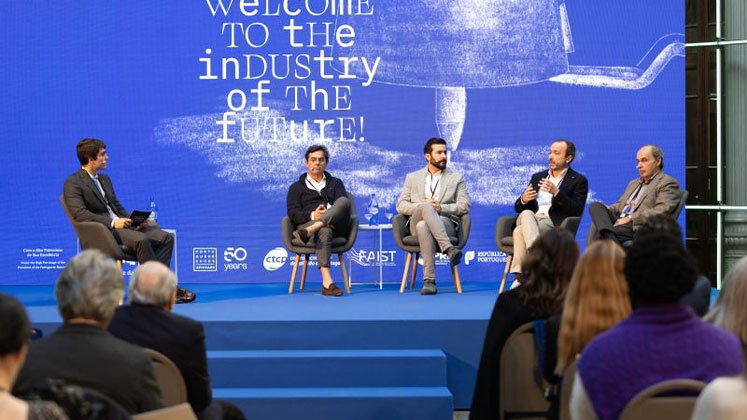
The panel discussion, moderated by journalist Estela Machado, examined whether Europe is genuinely moving towards reindustrialisation. Speakers included César Araújo of ANIVEC, João Maia of APICCAPS and Kerstin Jorna of the European Commission’s Directorate-General for Internal Market, Industry, Entrepreneurship and SMEs (DG GROW).
Jorna described Portugal’s footwear industry as a success story that combines tradition with technology, while noting the scale of Europe’s decline in global production. European footwear output, which accounted for around 30 per cent of global production three decades ago, now represents less than 3 per cent.
Maia attributed this shift to the rise of Asian producers, which have transformed global market shares. He said Europe had nevertheless retained the highest value-added stages of production by focusing on design, brand management and premium and luxury footwear, with countries such as Portugal, Spain and Italy continuing to preserve traditional manufacturing skills.
Araújo said the commercial landscape for clothing had also changed significantly, arguing that Europe had allowed third countries access to its market without equivalent regulatory obligations, creating unfair competition. He added that tax evasion through unpaid customs duties and VAT by third-country exporters remained a major concern. Maia noted that although regulatory changes had been announced by the European Commission, they were not expected to come into force before 2028.
On reindustrialisation, Maia said a slowdown in Chinese exports could encourage production to move closer to consumer markets, but current trends showed factories continuing to open in more cost-competitive Asian countries. He stressed that genuine reindustrialisation meant bringing production back to Europe to build competitive European businesses based on local skills.
Araújo said Europe’s industrial future would depend on a shift towards value-added products within a circular economy, but only if regulatory and legislative requirements were applied equally to European producers and companies exporting to the EU. He pointed to disparities in chemical regulations and the upcoming introduction of the Digital Product Passport as key issues.
The panel agreed that Europe’s competitiveness would depend on more balanced and agile regulation, alongside strong sustainability frameworks. Despite ongoing challenges, speakers concluded that the clothing and footwear industries would need to strengthen their collective voice to influence future policy decisions.