The Union Ministry of Heavy Industries has withdrawn a quality control order (QCO) relating to safety and quality standards for machinery and electrical equipment, effectively removing regulatory requirements on imported textile machinery.
With the rescission of the order, no quality control standards will apply to imported weaving, processing and other textile machinery. The move follows sustained representations from the textile industry, which had sought the withdrawal of the QCO on the grounds that it would hinder access to advanced machinery not manufactured domestically. Although the order was notified in 2024, its implementation had been deferred several times before being formally withdrawn.
Industry sources said the decision would enable textile manufacturers to continue importing specialised, high-quality machinery essential for maintaining competitiveness and meeting evolving production requirements.
The decision was welcomed by textile industry leaders in Surat and by the South Gujarat Chamber of Commerce and Industry (SGCCI), which had recently raised concerns about the QCO with Union Minister for Heavy Industries H D Kumaraswamy and senior ministry officials in New Delhi. SGCCI had argued that the order would adversely affect the growth prospects of South Gujarat’s textile sector.
According to SGCCI representatives, India’s textile market, currently valued at approximately US $ 165 billion, is projected to expand to US $ 350 billion by 2030. To support this growth, the industry is expected to require around 450,000 high-speed weaving machines, involving an estimated investment of US $ 15 billion. The chamber noted that a significant portion of this machinery is not produced in India and had submitted a detailed list of such equipment to the ministry. It also maintained that any decisions on quality control norms for textile machinery should be taken in consultation with user industries.
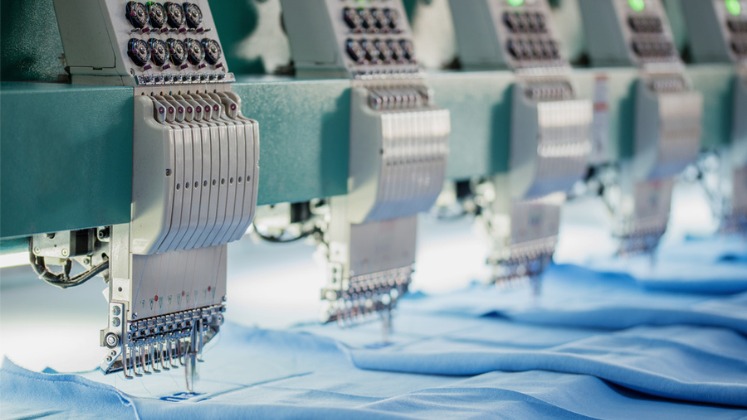
SGCCI’s vice-president-elect, Ashok Jirawala, said the embroidery sector was particularly dependent on imported machinery, as units typically operate multiple machines that must be replaced every two to three years due to rapid technological advancements. He noted that since such machines are not manufactured domestically, the industry relies heavily on imports and had therefore sought the removal of the QCO on embroidery machinery as well.
Former SGCCI president and textile industry leader Ashish Gujarat described the withdrawal as a long-standing demand of Surat’s textile sector. He said nearly 95% of textile machinery used by the industry is imported and that rapidly changing global technology made rigid quality control norms unnecessary. He added that continuation of the QCO could have led to significant job losses across the textile sector.