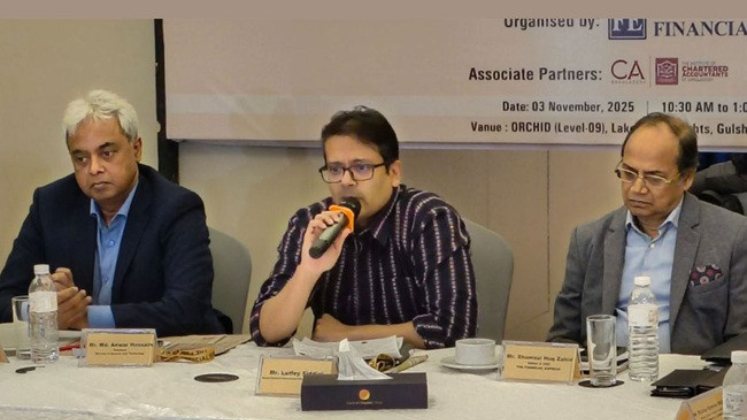
Bangladesh’s textile industry has developed into a major player in the world market, yet structural bureaucratic obstacles still prevent it from reaching its full potential. The Chief Advisor’s Special Envoy on International Affairs, Lutfey Siddiqi, emphasised that reforms must begin at the design level of governance and cautioned that small adjustments by itself cannot provide long-term growth.
“Our bureaucracy has no clear accountability for businesses,” asserted Lutfey Siddiqi, underscoring the necessity of structural reforms equal to that of Singapore or Malaysia.
Important aspects of the textile and apparel business such as logistics, energy access, raw material imports and export procedures, are hampered by the lack of interministerial coordination. Process efficacy is limited by departmental resistance, despite the fact that port digitalisation has greatly shortened the processing time for e-gates.
Such delays hinder production cycles and increase operating expenses for textile businesses.
Ahead of elections, private investment is still muted, with policy uncertainty being seen as the primary barrier.
“Private investment has clearly slowed, which is evident from Bangladesh Bank data,” stated Taskeen Ahmed, President of the Dhaka Chamber of Commerce and Industry and added, “To restore policy predictability, we require political stability and an elected administration.”
Foreign direct investment, which still accounts for less than 1% of GDP, is less important than domestic investment. “Who will invest when a country struggles to put out a fire at its international airport, lacks policy consistency and faces an energy crisis?” said Showkat Aziz Russell, President of BTMA.
Textile expansion is discouraged by the turnover tax, which was previously flexible but now counts losing businesses as profitable.
Khourshed Alam, COO, AkijBashir Group, said, “New industries pay higher gas rates while older ones enjoy cheaper gas. This deters investment.”
Design-level reforms should strengthen the use of digitisation, establish fair tax and energy policies and clearly define interministerial accountability for textile supply chains.
While industry associations push for structural responsibility, manufacturers and investors must actively interact with legislators and keep an eye on the effectiveness of digital services. When sourcing, international buyers should take cost and governance effectiveness into account.
Bangladesh’s textile industry has a skilled workforce, is well-known throughout the world and has room to grow. However, piecemeal improvements will continue to impede growth in the absence of structural bureaucratic redesign.