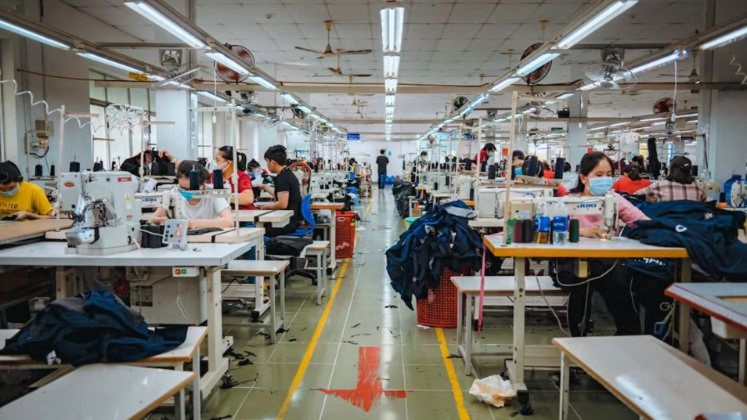
Former Bangladesh Bank Governor Dr Ahsan H Mansur pledged policy support and the accelerated disbursement of outstanding export incentives to help garment manufacturers navigate a deepening liquidity crisis ahead of Eid-ul-Fitr, as factories move to secure wages and bonuses for millions of workers.
The assurance was delivered at an emergency meeting at the central bank headquarters with a delegation from the Bangladesh Garment Manufacturers and Exporters Association (BGMEA), led by Senior Vice-President Inamul Haq Khan and Vice-President Md Shihabuddoja Chowdhury.
BGMEA representatives described what they termed a “deep crisis” in the ready-made garment sector, which generates the majority of Bangladesh’s export earnings. They reported that February’s production cycle had been reduced to 19 effective working days from 28 due to public holidays linked to the national election and Language Day, disrupting shipment schedules at a critical juncture.
The industry is also facing subdued international demand, declining unit prices and rising production costs, exacerbated by global geopolitical uncertainty. With compressed production timelines, factory owners are confronting what the association characterised as a “monumental challenge” in meeting wage and Eid bonus obligations on time.
To avert labour unrest and maintain industrial stability, BGMEA submitted a series of proposals to the central bank. The association urged the authorities to expedite the release of approximately Taka 5,700 crore in pending cash incentives for the 2025–26 fiscal year, currently delayed in audit procedures.
It also called for preferential treatment for small and medium-sized factories in the disbursement process to help ensure their survival.
In addition, BGMEA requested the introduction of a special wage-support loan facility equivalent to two months’ salaries, incorporating a three-month grace period and a 12-month repayment schedule. The association further sought the reinstatement of Packing Credit at a 7 per cent interest rate and an expansion of the Pre-shipment Credit Scheme from Taka 5,000 crore to Taka 10,000 crore, alongside an extension of the scheme’s tenure to 2030.
Dr Mansur acknowledged the urgency of the situation and indicated that the central bank would take “positive steps” to address the liquidity shortage, with a particular emphasis on prioritising the release of cash incentives for small and medium-sized enterprises.
He stated that ensuring workers are paid on time, thereby maintaining stability in key industrial zones, remains a top priority for the central bank.
The intervention comes at a time when Bangladesh’s export-reliant apparel industry is under mounting pressure from global market volatility, highlighting the central bank’s delicate task of balancing financial prudence with the protection of employment in one of the country’s most vital sectors.