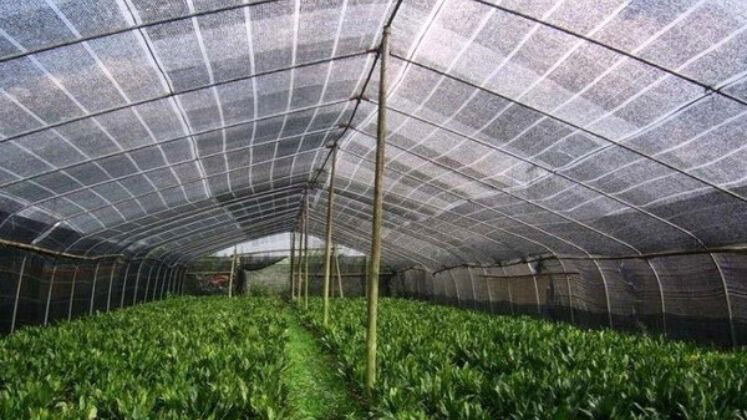
India has set up a demonstration farm to showcase the use of agro-textiles, particularly protective nets, at Navsari in Gujarat at a cost of Rs. 4 crore (US $ 441,000), with another facility under development at Pusa in Bihar under the National Technical Textiles Mission, according to Mission Director Ashok Kumar Malhotra.
Malhotra said that production had gathered momentum in several of the 12 major segments of technical textiles, notably agro-textiles, geo-textiles and industrial textiles. He noted that the adoption of value-added agro-textile nets manufactured domestically was increasing across the country.
He added that the Mission was open to establishing a similar demonstration farm in southern India if an agricultural university from the region came forward with a proposal.
As part of its capacity-building efforts, the National Technical Textiles Mission has signed memoranda of understanding with 45 educational institutions to introduce technical textiles into undergraduate and postgraduate curricula. This includes specialised courses on geo-textiles for civil engineering students.
Malhotra said that, of the 240 students trained so far, 130 have been placed in technical textile industries. In addition, textile research associations and sector skill councils are offering short-term training programmes and have trained around 1,400 candidates to date.
On research, development and innovation, he said the Mission provides grants of up to Rs. 50 lakh (US $ 55,000) to start-ups linked with recognised incubation centres. At present, 24 start-ups are at various stages of product development. Financial support is also available for the indigenous development of machinery used in technical textiles, with the Mission funding 50% of project costs. So far, three machines have been developed domestically under this initiative.
Malhotra said that of the total Rs. 1,480 crore (US $ 163 million) allocated to the Mission since its launch in 2019–20, around Rs. 720 crore (US $ 79.44 million) has been utilised. Of this, Rs. 1,000 crore (US $ 110 million) was earmarked for research and development, with Rs. 520 crore (US $ 57.37 million) already spent, while Rs. 210 crore (US $ 23.17 million) has been utilised from the Rs. 400 crore (US $ 44.13 million) allocated for education and training.