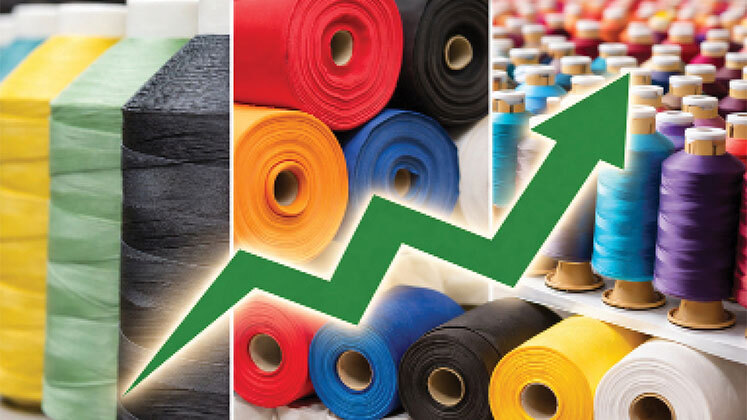
How’s the Josh! High Sir! That, in simple terms, is the mood across India’s yarn, fabric and fibre industry today. Despite tariffs, trade disruptions and geopolitical tensions, the industry is moving ahead with confidence. The optimism is being driven by supportive policies, rising demand for value-added and sustainable products, and stronger operational readiness that is setting the stage for steady growth in 2026.
One of the strongest pillars of this optimism is trade policy. India’s push on Free Trade Agreements (FTAs) has brought fresh hope to the industry. The country has recently signed new FTAs with Bahrain and New Zealand and is actively negotiating a comprehensive trade agreement with the European Union, targeted for 2026. The long awaited FTA with the UK is also expected to be implemented by late 2026. In addition, trade talks with the US are progressing well, something the industry is watching closely.
The domestic market, meanwhile, continues to show strong momentum, supported by several growth drivers. India remains the fastest-growing major economy in the world. In FY 2024–25, GDP growth is estimated at around 6.5%, ahead of most large economies. Nominal GDP is expected to reach US $7 trillion by 2030 from US $4 trillion.
Policy support is adding further strength. Measures such as zero income tax for earnings up to Rs. 12 lakh, recent GST rationalisation, the removal of quality control rules on polyester fibre and yarn, exporter relief packages and the PLI scheme for textiles have improved industry sentiment. The possibility of a lower RBI repo rate is also seen as a positive signal.
At the same time, fast improving infrastructure is helping cut logistics costs, providing an additional tailwind.
Together, these factors are expected to significantly boost India’s domestic fashion retail market, which is valued at about US $120 billion today.
Denim Mills Adapts, Upgrades and Expands
At the operational level, manufacturers are sharpening their focus on core products with steady and repeat demand. Traditional categories continue to remain important. Nowhere is this shift more visible than in India’s denim sector.
India is the world’s third-largest denim producer and the second-largest producer of denim fabric. Installed capacity is estimated at around 1,600 million metres per year. The country also has a fast-growing domestic denim consumer base.
Globally, the denim jeans market was valued at around US $86.7 billion in 2024. It is projected to reach US $121.5 billion by 2030. This represents a CAGR of 5.8 %.
The domestic denim market is also expanding. The Indian denim market is projected to reach around US $7.82 billion by FY 2027–28. It is expected to grow at a CAGR of 15 % between FY 2022–23 and FY 2027–28.
Mills are preparing for the next phase of demand by offering a wide range of denim constructions, washes, and performance features required by both domestic brands and international retailers. This includes acid wash, varied indigo casts such as red, green and yellow tones, and controlled distressed effects like fraying and ripping.
Fabric development is also expanding. Mills are supplying classic cotton denim, cottonised hemp, stretch denim and elastane blends for comfort and recovery. Lightweight, midweight and heavyweight denim options are available for different end uses. Seasonal expansion is supported through specialty denim fabrics such as jersey, fleece, sateen, silk, linen, madras and Tencel® blends.
Finishing capabilities are becoming more performance-oriented, with mills offering dirt resistance, water repellency, resin coatings and thermal regulation solutions such as Thermadapt.
Processing techniques such as stonewash, hand sanding, whiskering, garment dyeing and shibori are also being offered. Specialty constructions such as selvedge, preshrunk denim and motion fabrics are helping improve durability and fit. Linings like sherpa are enabling denim products for colder weather categories.
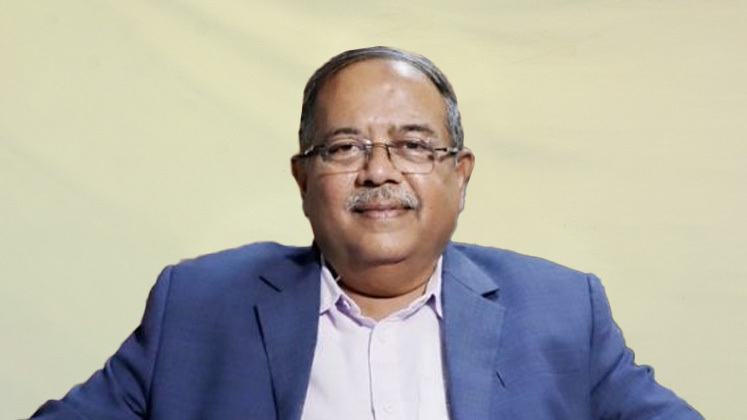
“For 2026, the outlook is optimistic. Our core denim portfolio, mid-range and mass-market fabrics that are supplied to long-standing domestic and export customers, will continue to deliver steady volumes,” said Suketu Shah, CEO, Vishal Fabrics Ltd., an Ahmedabad-based denim fabric manufacturer and part of the Chiripal Group, with a capacity of over 100 million meters per annum. It manufactures around 250 denim fabric varieties each month. Around 30 to 35 percent of these are regular selling fabrics.
At the same time the company’s push towards value addition is gaining traction. For example, Vishal Fabrics has introduced premium finishes for softer hand-feel, better drape, stronger colour fastness and comfort features like moisture management, wrinkle resistance, UV protection, water repellency, anti-microbial properties, anti-pilling and higher durability.
The company is also investing in wider-width fabrics. Compared to standard denim widths of 52-60 inches, wider widths of 66-72 inches, and up to 78 inches in some cases, allow more garment panels to be cut from a single fabric roll. This improves fabric utilisation, reduces wastage and lowers production costs.
The company is stepping up its export focus, with priority markets including Portugal, Panama, Kenya, Morocco and Bangladesh. Initial orders have already started coming in from Bangladesh, which accounts for nearly 35 % of India’s denim exports. Commenting on the impact of tariffs during the Q4 FY25 earnings call, Punit Lalbhai, Vice Chairman, Arvind Limited, said the industry is operating in one of the most volatile periods in recent years. However, he added that margin pressures are expected to normalise three to four months into the New Year.
Arvind Limited, which produces over 100 million metres of fabric and around six million pairs of jeans annually, also operates the Arvind Denim Lab, a unique facility that allows brand design teams to work closely with the company using shared infrastructure and capabilities. The facility supports co-creation of fabrics, products and finishes.
Premium Yarns, MMCF and Functional Fibres Gain Ground
Beyond denim, value addition is equally shaping the outlook for nondenim fabrics, yarns and fibres.
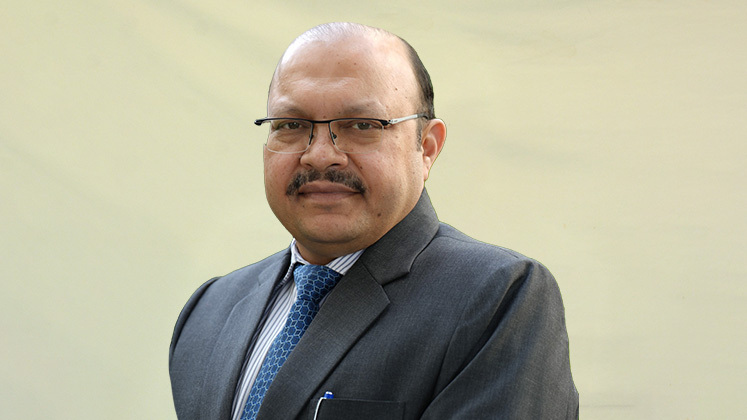
“We expect our growth in 2026 to come from a balanced portfolio of New Product Development (NPD) and routine core products. Currently, NPD contributes approximately 5-8% to our overall growth,” said Rajeev Gupta, JMD, RSWM Ltd, which is part of the LNJ Bhilwara Group and is one of the leading manufacturers and exporters of synthetic, cotton and blended spun yarns in India.
Rajeev said their yarn division has sharpened its focus and energy on developing high-quality blends and export-oriented products to improve margins. For instance, RSWM has developed a compact micro modal yarn and successfully marketed it to a US brand.
RSWM has also entered into a strategic Joint Development Agreement with Birla Cellulose (a division of Grasim Industries) and TACC (The Advance Carbon Company) Limited to develop graphene-enhanced functional textiles.
Grand View Research valued the graphene market at US $195.7 million in 2023, forecasting a CAGR of 35.1% from 2024 to 2030.
RSWM is also implementing continuous capacity expansion across its manufacturing operations. Knit processing capacity will rise from 750 tonnes to 900 tonnes per month, including a printing facility with 150 tonnes per month capacity, while recycled polyester fibre capacity will expand from 120 tonnes to 135 tonnes per month.
| RSWM is strengthening its premium portfolio with Kapaas, a combed compact yarn offering higher purity, a smoother hand feel and moisture absorption of up to 8%, aimed at premium fashion and lifestyle applications. |
At the fibre level, growth opportunities are becoming even more pronounced. According to Textile Exchange, global fibre production is expected to rise from 124 million tonnes in 2023 to about 160 million tonnes by 2030.
Within this broader growth, manmade cellulosic fibres (MMCF) remain significantly under penetrated in India, said Vadiraj Kulkarni, Business Head- Birla Cellulose, Grasim Industries Ltd, a global producer of viscose, diversified chemicals, linen yarn and fabrics producer. “In India, MMCF currently holds only about 5-6% of the total fibre basket, leaving significant headroom for expansion. We anticipate double-digit growth in this segment over the next 4-5 years. In terms of categories, women’s wear, men’s wear, home textiles and nonwovens, particularly lyocell-based applications will lead the momentum.”
He added, “On the export front, Europe and the US will continue to grow, though at a slower pace, while Asia and Africa offer strong potential.”
Globally, MMCFs are the third most-used fibre after polyester and cotton. Annual production stands at around 7.1 million tonnes, accounting for roughly 6.4% of total global fibre output.
The category includes viscose, acetate and lyocell, each serving different end uses. Viscose dominates with nearly 79% share, while lyocell, though still small at about 4%, is the fastest-growing MMCF, with demand expected to rise at around 15% CAGR in the coming years.
The company has developed specialised cellulosic fibres for fire-retardant textiles, flushable wipes and hygiene products, and is upgrading four production lines at its Nagda facility in Madhya Pradesh that make dyed and grey fibres.
However, experts cautioned that global fibre markets continue to remain volatile, marked by price fluctuations and uneven demand. Cotton price swings and weak downstream demand have made consistency in pricing and quality a key customer priority.
Raw material sourcing also remains a challenge, especially for specialty fibres. Dependence on imports is still high.
Meanwhile, Deepak Shikharwal, Manager, WellKnown Polyester Ltd, said demand for polyester filament yarn (PFY) is expected to strengthen in the coming year. The company claims to be among the top five fully integrated polyester filament yarn manufacturers in India.
Other companies are also investing in PFY. For example, Sanathan Textiles, which offers more than 12000 types of Yarn, has started commercial production of PFY at its new greenfield facility in Wazirabad, Punjab.
As the industry innovates and expands, all signs point to sustained growth and momentum heading into 2026.