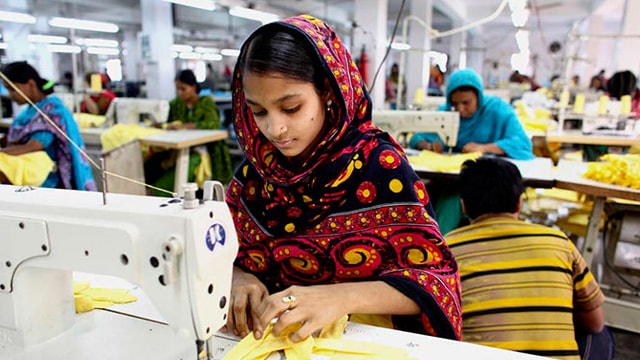
On the last day of May 2018, some hundreds of workers of Ashiana Garments Industries Ltd. came down to the streets of Rampura, Dhaka, and stirred unrest for hours. They were particularly agitated over rumours that the factory was about to close without clearing wages of about two months just days ahead of the biggest religious festival in Bangladesh – Eid-ul-Fitr.
It was not just a random incident of a factory being unable to clear dues with Eid bonus and unpaid arrears at stake. Ashiana Garments was on a list which identified those “vulnerable” factories which might not be able to follow Government directives of clearing the workers’ dues and bonus by June 14 – before the Eid.
Bangladesh Garment Manufacturers and Exporters Association (BGMEA), the apex forum of the country’s apparel makers, has identified about 1,200 such “vulnerable” factories – from intelligence reports of different agencies – which might slip in paying dues and bonus, and consequently create labour unrest.
According to insiders, BGMEA has drawn up elaborate plans to counter such slip ups. In total, 15 zonal committees are intensely following the developments in this regard. They are keeping a close eye, especially on these 1,200 factories, and try to avert any form of labour unrest. They are prepared to settle the crisis by lobbying for loans with banks.
However, it did not stop Ashiana Garments from abandoning its workers. Among others, the United Trousers in Ashulia, Chun Ji Knit Ltd in Dhaka’s Badda, Nine Angle Garments Ltd in Gazipur’s Konabari, Raina Garments and Anika Garments in Dhaka’s Mirpur, and Badhon Corporation in Ashulia are in similar state, according a few names obtained from the list.
A director-level official of the BGMEA told Apparel Resources on condition of anonymity that such “vulnerability” is “nothing new” and that they are trying their level best to help these factories. But, from what he said, there are fears that even then, problems might arise. He also added that such news is bad publicity for the garment sector.
Sultan Uddin Ahmed, Executive Director, Bangladesh Institute of Labour Studies (BILS), tells Apparel Resources that there can be no explanation for this… “Why can’t they pay the workers? Eid is a routine cycle each year. They (owners) should have been prepared.”
Adding to that, Workers’ rights activist Jolly Talukder, General Secretary of Garment Workers’ Trade Union Centre, told Apparel Resources that incidents of deprivation ahead of Eid are a common practice every year. “The factory owners must come forward with more responsibility to create a peaceful atmosphere for the workers,” he added.
Blaming sluggish or seasonal business for the dealy or non-payment of wages and bonus, Syed Sadek Ahmed, Managing Director of Space Sweater Ltd., told Apparel Resources, “It is normal for a factory to have a bad month or so. You see, the buyers do not guarantee that they will source from us throughout the year. So, the owners have to hunt for buyers all the time. It is very normal that business will not be good all the time. The Govt. can create a fund with association of the BGMEA and give out loans to those deserving factories to clear the wages and bonus of workers every year.”