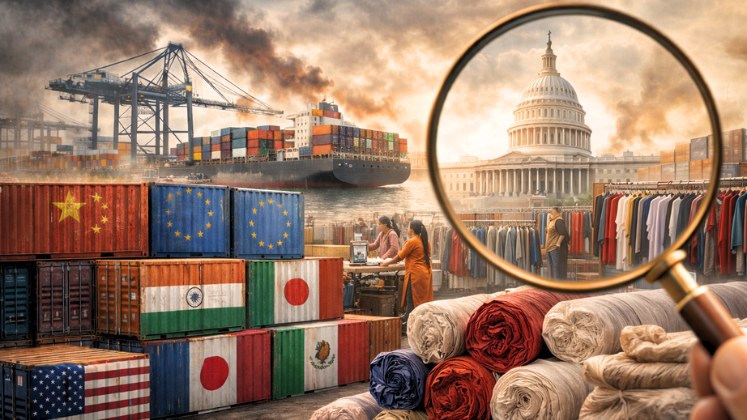
The administration of US President Donald Trump has launched a new trade investigation into excess industrial capacity among 16 major trading partners, in a move that could pave the way for fresh tariffs later this year.
The probe, announced on Wednesday by the Office of the US Trade Representative (USTR), is being conducted under Section 301 of the Trade Act, which allows the United States to investigate and respond to unfair trade practices by foreign governments.
US Trade Representative Jamieson Greer said the investigation would examine whether several economies were contributing to structural overcapacity in global manufacturing through policy measures that distort trade.
Countries under scrutiny include China, the European Union, India, Japan, South Korea and Mexico, along with Taiwan, Vietnam, Thailand, Malaysia, Cambodia, Singapore, Indonesia, Bangladesh, Switzerland and Norway.
Greer stated that the investigation would focus on economies where there was evidence suggesting structural excess capacity in manufacturing sectors. He explained that indicators such as persistent trade surpluses and underutilised production capacity would be examined as part of the probe.
According to Greer, the investigation would also assess a range of policy factors that may contribute to industrial overcapacity. These include government subsidies, suppressed domestic wages, the non-commercial activities of state-owned enterprises, inadequate environmental and labour standards, subsidised lending and currency practices.
The move follows a 20th February ruling by the US Supreme Court, which struck down the Trump administration’s global tariffs imposed under a ‘national emergencies law’. The court ruled that the tariffs were illegal, effectively dismantling a key element of the administration’s trade policy.
In response to the ruling, the administration imposed a temporary 10% tariff for 150 days under Section 122 of the Trade Act of 1974 while exploring alternative trade enforcement mechanisms.
Greer indicated that the administration intended to complete the Section 301 investigation and determine potential remedies before the temporary tariffs expire in July.
The investigation is expected to proceed quickly. Public comments will be accepted until 15th April, and a hearing is scheduled to take place around 5th May.
In addition to the industrial capacity probe, the USTR is preparing to launch a separate Section 301 investigation focused on imports produced using forced labour.
Greer said the new investigation, expected to begin on Thursday, could cover more than 60 countries and would examine whether further restrictions should be imposed on such goods entering the US market.
The investigations mark a renewed effort by the Trump administration to use trade enforcement tools to address global manufacturing imbalances and labour concerns following the legal setback to its previous tariff programme.