Bangladesh’s two leading apparel industry associations have sharply criticised the government’s decision to impose duties on yarn imports, warning that the move could severely damage the country’s ready-made garment (RMG) sector, its largest export industry.
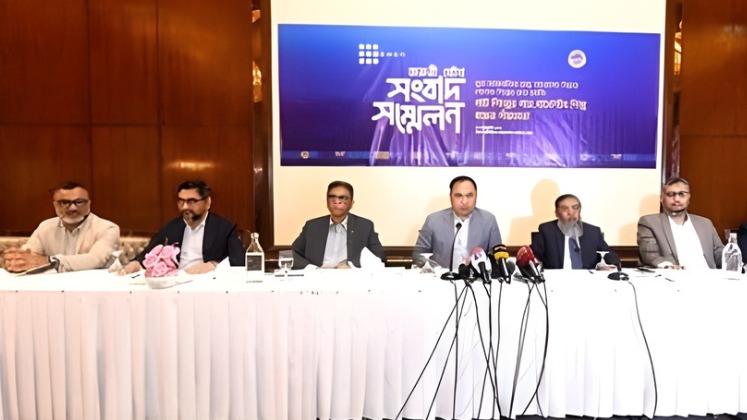
At a joint press conference held in Dhaka on 19th January, the Bangladesh Garment Manufacturers and Exporters Association (BGMEA) and the Bangladesh Knitwear Manufacturers and Exporters Association (BKMEA) called for the immediate withdrawal of the duties, describing the decision as unilateral and poorly timed amid a prolonged global slowdown and persistent domestic energy shortages.
Senior leaders from both organisations were present at the briefing, including acting BGMEA president Selim Rahman and BKMEA president Mohammad Hatem, along with other office-bearers and directors from the two associations.
Reading from a prepared statement, Rahman said the imposition of duties on yarn imports at a time of weak global demand and domestic supply constraints would directly threaten Bangladesh’s primary export sector. He warned that unless the decision was reversed, apparel manufacturers would be compelled to take strong measures to protect the industry’s survival.
Hatem said the garment sector was already in an extremely fragile condition and cautioned that further policy shocks could push it towards collapse. He drew parallels with the decline of other traditional industries, warning that apparel could face a similar fate if current pressures were not addressed.
BKMEA executive president Fazle Shamim Ehsan said the policy shift had already unsettled international buyers. He noted that buyers in key export markets had reacted negatively to the imposition of duties, raising concerns about cost escalation and supply reliability.
Industry leaders also questioned the legal basis of the decision, arguing that safeguard duties under international trade rules can only be imposed after establishing material injury to domestic producers, a process they said had not been followed. As a result, they claimed the move could be inconsistent with the World Trade Organization’s Safeguard Agreement.
The associations highlighted that domestic spinning mills were currently charging around 40 US cents, or approximately Taka 46, more per kilogram of yarn than prevailing international prices. They warned that this cost differential would significantly erode the competitiveness of Bangladesh’s apparel exports at a time when global buyers are exerting intense price pressure.
The knitwear segment alone contributes an estimated US $ 27 billion annually in export earnings, and industry representatives cautioned that the new duties could place this revenue stream at serious risk. They also pointed out that local mills often struggle to supply specialised and high-value yarns within required timelines, and that restricting imports would disrupt production schedules across factories.
While reaffirming support for the domestic spinning industry, BGMEA and BKMEA leaders said protection should not come at the expense of garment manufacturers’ access to raw materials. Instead, they urged the government to assist spinning mills through direct cash incentives, reliable energy supply and access to low-cost financing.
Emphasising the broader economic stakes, the two industry bodies called for the immediate withdrawal of the yarn import duties, warning that continued enforcement could undermine export earnings and jeopardise the livelihoods of millions of workers employed across Bangladesh’s apparel value chain.




 Bharat Tex Special Report 2026