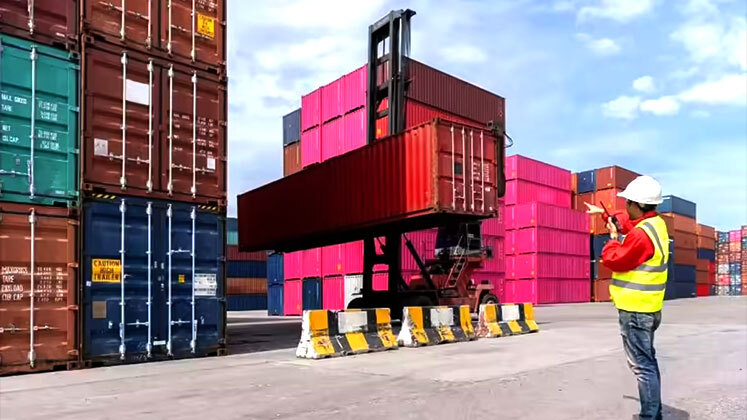
India has announced an export support package worth Rs. 4,531 crore (approximately US $ 740 million) to shield its exporters from the impact of retaliatory tariffs imposed by the United States and to strengthen its foothold in global markets.
The funding, equivalent to more than Taka 61.7 billion at current exchange rates, will be deployed under the Market Access Support scheme. The programme is designed to help Indian exporters expand overseas reach through participation in international trade fairs, global exhibitions and buyer–seller networking initiatives. The initiative comes at a time of heightened volatility in global trade and places particular emphasis on micro, small and medium enterprises (MSMEs) and priority export sectors.
The announcement has raised concerns among Bangladeshi exporters, particularly in the textile and apparel sector, who fear that India’s enhanced export support could further erode Bangladesh’s competitiveness in both export and domestic markets.
Mohammad Hatem, President of the Bangladesh Knitwear Manufacturers and Exporters Association (BKMEA), said India has long provided extensive support to its export-oriented industries through low-interest industrial loans, land-related incentives, labour cost advantages and infrastructure facilitation. He noted that industrial loans in India are available at interest rates of around 6%, alongside government-backed support for land acquisition and administrative services, which collectively give Indian producers a significant cost advantage. As a result, Bangladesh has increasingly become both a legal and illegal market for Indian yarn and fabrics, he added.
Hatem warned that the latest export aid package could intensify pressure across Bangladesh’s spinning, textile and apparel value chains. He said many domestic spinning mills are already being forced to shut down as they struggle to compete with cheaper Indian yarn entering the market.
Trade analysts said the development underscores the need for Bangladesh to reassess its post–least developed country (LDC) graduation strategy in light of India’s growing export competitiveness. Policy experts have recommended diversifying export markets beyond traditional destinations such as the European Union and the United States, introducing targeted incentives for the spinning and man-made fibre segments, and fast-tracking the implementation of the Export Policy 2024–27 roadmap.
Exporters cautioned that failure to respond decisively could result in further mill closures, weakening of backward linkage industries and a loss of market share in the US $ 500 billion global garment trade.