A fresh wave of violence in Bangladesh has placed the textile and garments industry in West Bengal under significant strain, disrupting long-standing trade flows between the two neighbours and affecting exporters across eastern India.
The total value of cotton yarn, raw cotton and fabric exported from India to Bangladesh is estimated at more than Rs. 22,000 crore (US $ 2.45 billion), with a substantial portion traditionally routed through West Bengal. In addition, garment exports from Bengal to Bangladesh, valued at over Rs. 500 crore (US $ 55.72 million), have also been adversely affected by the unrest.
Former regional chairman of the Federation of Indian Export Organisations (FIEO), Sushil Iatwari, said Bangladesh remained the largest buyer of Indian cotton, fabric and cotton yarn. He noted that cotton yarn exports were valued at around US $ 1.2 billion, while exports of cotton and fabric stood at approximately US $ 1.5 billion. He added that supplies from North Indian mills had historically moved through land routes via West Bengal, which has six land ports, but Bangladesh had already imposed a ban on the import of cotton yarn through land routes.
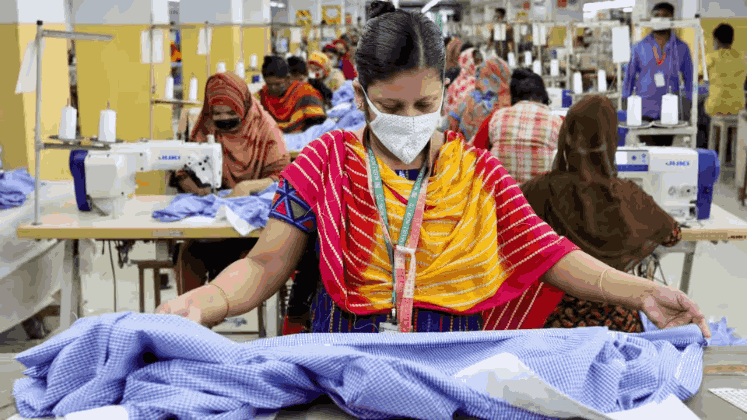
In Kolkata’s Metiabruz area, garment manufacturers are feeling the immediate impact, with several export orders reportedly cancelled by agents. Sajjan Ali Mollah, president of the West Bengal Garment Association, said manufacturers were now being forced to turn to domestic markets in other Indian states due to the absence of buyers and orders from Bangladesh.
Alamgir Fakir, secretary of the Bangla Readymade Garments Manufacturers and Traders Welfare Association, said bulk orders from Bangladesh had begun declining last year and that the renewed unrest had further eroded business prospects. He indicated that the current situation had effectively halted trade with the neighbouring country for many small manufacturers.
Sanjay Jain, chairman of the Indian Chamber of Commerce’s national textiles committee, said the resurgence of unrest and anti-India marches was once again slowing bilateral trade. He expressed hope that conditions might improve after the February elections but warned that West Bengal and the North East, which export a wide range of goods—particularly garments—to Bangladesh, were among the biggest losers. He added that the turmoil was also severely affecting micro, small and medium enterprises.
However, some industry stakeholders believe the unrest in Bangladesh could ultimately benefit India’s import-export sector. Rajesh Goel, chief executive officer of garments firm Neon Creations, said Bangladesh risked losing buyer confidence due to the instability, which could prompt international buyers to shift orders to India. Ramesh Agarwal, director of Rupa & Co, echoed this view, suggesting that exports from Bengal and other parts of the country could increase as buyers seeking alternatives move away from the Bangladeshi market.






 Bharat Tex Special Report 2026