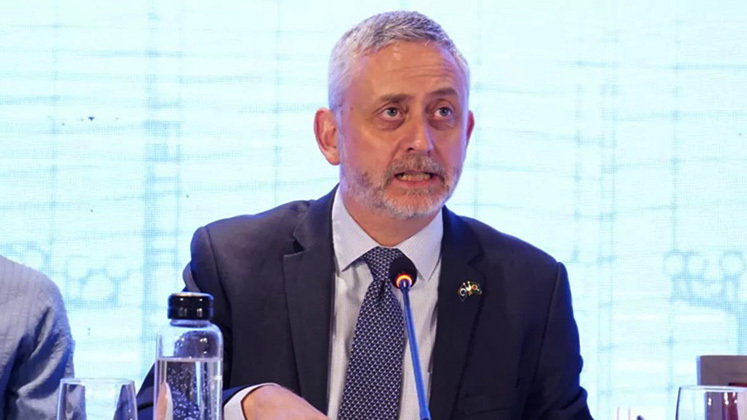
Bangladesh’s ratification of three key International Labour Organization conventions has significantly strengthened its prospects for securing the European Union’s GSP+ trade scheme and moving towards future Free Trade Agreement discussions, EU Ambassador to Bangladesh Michael Miller has said.
Speaking at an event marking the ratification of ILO Conventions 155, 187 and 190 at the Foreign Service Academy in Dhaka, the ambassador noted that the move demonstrates Bangladesh’s growing alignment with international standards on labour rights, human rights and good governance—core requirements for qualifying for the EU’s highest-tier trade preferences.
The transition from the Everything But Arms (EBA) arrangement to GSP+ is expected to be critical for preserving Bangladesh’s preferential access to the EU, now the country’s largest export market for ready-made garments, as it prepares to graduate from Least Developed Country status in 2026. Miller stressed that GSP+ eligibility is performance-based and depends on the effective implementation of 27 international conventions covering labour, environmental protection, governance and human rights.
He added that future EU engagement with Bangladesh “will remain rooted in mutual respect for fundamental rights and shared prosperity,” and that the “highest standards in rights protection and governance will be central” should Bangladesh eventually seek formal FTA negotiations.
Miller also acknowledged the interim government’s recent steps to improve workplace rights, enhance labour inspections and amend labour laws, noting that these reforms are essential for maintaining privileged market access.
Bangladesh has now become the first country in South Asia to ratify ILO Convention 190 on violence and harassment, and the first in Asia to ratify all ten fundamental ILO conventions. With 36 ILO agreements now ratified, officials emphasised that the next challenge is full implementation across sectors such as transport, agriculture and construction.
Labour Reform Commission Chairman Syed Sultan Uddin Ahmmed cautioned that ratification alone is not enough, urging comprehensive enforcement of occupational safety and health standards for all workers. ILO Country Director Max Tuñón said the ratifications send a powerful global message that Bangladesh is preparing for modern labour laws, stronger institutions and safer, more productive workplaces.