A garment that’s ‘Made in Italy’ is the epitome of craftsmanship, unparalleled quality and a matter of pride for many. Clothing brands – both fast fashion and luxury – across the globe move towards Italy to get their clothing manufactured by the best of the industry’s artisans. Such is the weight that the ‘Made in Italy’ label carries!
With a goal to connect the Italian manufacturing industry with global clothing brands, US-based B2B manufacturing and sourcing platform MakersValley is proactively enhancing its global footprint and democratising the apparel manufacturing business by making it more transparent, accessible and affordable for fashion brands and designers. Team Apparel Resources got in conversation with Alessio Iadicicco, Co-founder and CEO, MakersValley, and unearthed the business proposition of the company. Excerpts…
Tell us about the background of MakersValley. How did it start and how big is your business operation?
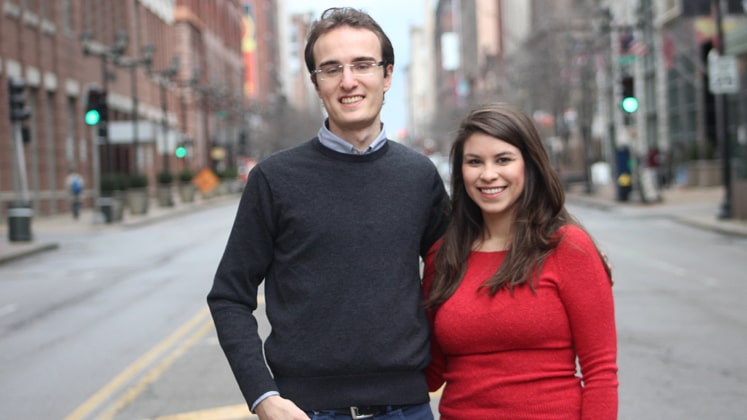
Alessio: Going back to how we started, MakersValley was founded in April 2016 in New York, USA. The original idea was to actually sell our own brand of men’s suits in boutiques in Manhattan back then. I and my team went all over Manhattan trying to sell suits, but soon we realised that boutiques were not looking to tie up with the business model that we were offering to them. They believed we were procuring fabrics from Italy and then manufacturing our suits here in China Town in New York. All the boutiques wanted to source garments directly from Italy and that’s what their customers wanted.
Some of these boutiques asked us to source a good number of a particular design (30, 40 pieces) and expressed their desire to connect with artisans in Italy. That’s how we started. So, after working with about 30 factories in Italy for nearly 20 boutiques in Manhattan, we decided to start from scratch and create a platform called MakersValley. Today, over 7,000 brands from all around the world and 137 apparel factories from Italy connect with us on our platform.
Also Read: Indian garment factories bet on technology post-COVID-19
How has Italian manufacturing transformed from pre-COVID to post-COVID times?
Alessio: During pre-COVID times, there were some factories that were carrying on business development activities just because these things have always been done that way. They always followed a traditional approach, but it was a struggling one even long before COVID-19 arrived, as the fashion industry has been evolving rapidly over the years.
During COVID-19, boutiques got closed and wholesale business was impacted badly both in Italy and the USA which pushed the industry to look for new approaches to survive. Hence, many of the industry stakeholders (brands and manufacturers) contacted us to learn more about us and to look for new sources online. I can say that many brands and manufacturers were skeptical in following a more e-commerce-like-business model, but now they are not. Bricks-and-mortar retail model was always a go-to retail model for our members, but e-commerce has taken over it for quite some time now, especially in 2020, so they are more used to conducting activities online.
What type of manufacturing model do your factories mainly follow? Is it mass production, batch production or a combination of both?
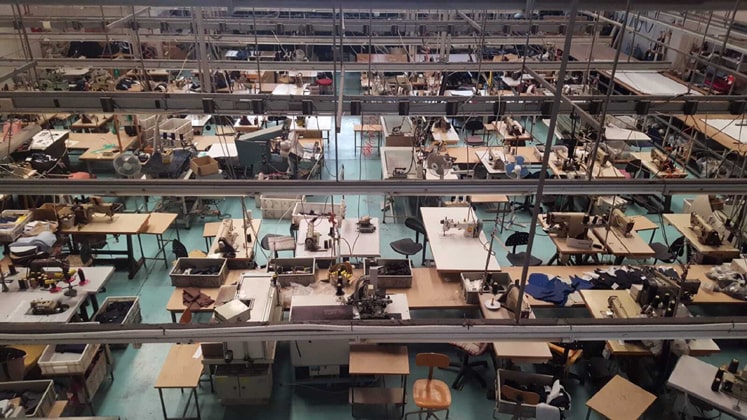
Alessio: We stick to a high-quality batch manufacturing model. Italy has established itself as a semi-artisan destination and we don’t have facilities where we can make millions of garments every month. Over 98 per cent of the Italian apparel manufacturing industry is based on the family business which is run by 15-25 people and all of them are highly skilled.
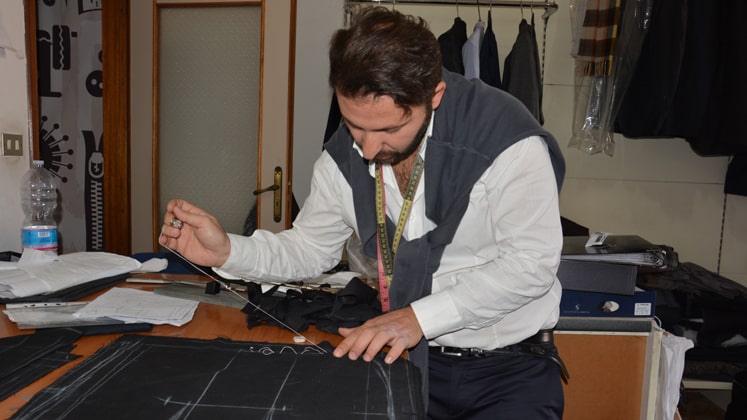
To give you a number in terms of manufacturing enterprises, five of our 100+ partner factories have the ability to do mass production which is around 200,000-300,000 pieces per month. Most small-scale and mid-scale factories prefer to produce 50 dresses of US $ 200 rather than making 5,000 dresses of US $ 50. All the factories in our network provide various services right from fabric sourcing to shipping, and therefore, aren’t labelled as just cut and sew factories.
When you say e-commerce, it comes up with so many technological challenges. One of these being high return rate due to fitting issues. Do you differ in opinion? What sort of challenges are you facing?
Alessio: Most of our factories usually follow a standard grading system. A lot of communication happens on our platform between a brand and a factory. Teams of factories, most of the time, send all the measurements of products to the brands, and the brands put the actual measurements of the garments online for the customers.
I don’t see a problem of fitting; rather, the main problem is communication between brands and end consumers about brands’ missions and values. Transparency in the entire supply chain of garment production is necessary and the end-customer must know how his/her garment is made. That’s one problem we were facing, but we came up with a solution. On our platform, we have built a custom app which all our partner factories and members can use to send and receive real-time photo and video updates of their products as these are produced in the factories.
Additionally, our office in Italy is working with Italian factories to ensure that all the factories in our network follow all the labour laws, sustainability laws and compliances to work in a more transparent atmosphere.
Also Read: Embarking on a digital journey: The only way to stay relevant in fashion
Do you agree that a technological gap is still there in the supply chain and that’s hurting the much-anticipated adoption of digitalisation?
Alessio: When we talk about digitalisation, we always talk about digitalisation of the end of the supply chain. You see all great technologies like AR, VR and 3D are being implemented for enhancing the experience of the end-consumers. Nothing has really been done at the beginning of the fashion supply chain. We have only a few of technologies for fabric mills and we don’t have enough innovations for the factories that produce buttons or such trims and accessories. I believe until the entire fashion tech industry understands that it’s not just about how you sell the garment but it’s also about who produces the garments, the gap will always remain intact. We, at MakersValley, are working to fill this technological gap.
What are the next 5-year plans of MakersValley?
Alessio: Our next 5-year plans include working with more luxury fashion brands in Asia. We already have some brands listed with us from Hong Kong, Singapore and Japan, but currently, the number is low. It will be good for us to start working with more Asian brands, as Asia is going to grow exponentially, seeing the increasing purchasing power of millennials and Gen-Z. We are also eyeing to expand in India, Taiwan and China in years to come.
Also Read: Our customers never stopped working even in the pandemic: Datatex CEO Ronnie Hagin