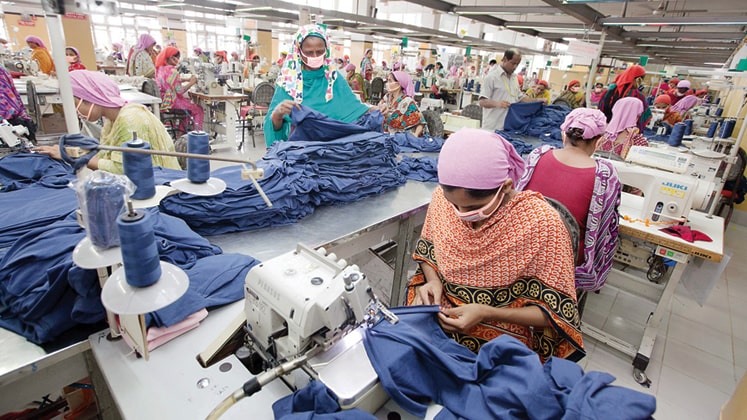
Bangladesh’s apparel exports to India saw a big surge in November, witnessing a growth of over 300 per cent during July-November 2018.
According to latest data provided by Bangladesh Export Promotion Bureau, the total apparel exports during the said period stood at over US $ 232 million, what was 332 per cent gain during the first five months of fiscal 2017-18.
Further analysis into the data shows, for the month of November alone, the export receipt stood at over US $ 87 million. Woven items were more in demand from India, which fetched over US $ 166 million over July-November 2018. Knitwear fetched US $ 66 million.
“India is a huge market. We are expecting that these figures will rise more in the coming future.” – Mohammed Nasir, Vice President (Finance) at Bangladesh Garment Manufacturers and Exporters Association (BGMEA), told Apparel Resources on this note.
In the knitwear segment, the growth witnessed was 264 per cent compared to the US $ 25.6 million receipt in the last year. For the individual month of November knitwear fetched US $ 28.4 million. Back in September, India procured US $ 12 million worth of this item.
In the woven section, the growth witnessed was 377 per cent, up from what was just over US $ 44.1 million in a year-to-year basis. For the individual month of November, woven exports stood at US $ 59 million. In the previous month of September, the procurement was US $ 31 million.
“In the past, India had different taxing policies across its states. This used to create trade barriers for us. Now, they have imposed a uniform taxing policy which is aiding the business. Also, international brands and stores are opening up in India, which demand more apparel products from Bangladesh.”
Plus, according to him, the economy in India is flourishing. The neighbouring economy is seeing a strong growth of the middle-income segment; a group that has more purchasing capacity.
India has been growing into a big potential market for Bangladesh’s apparel exporters. Last fiscal, Bangladesh’s apparel exports witnessed a 100 per cent gain in India.






 Bharat Tex Special Report 2026