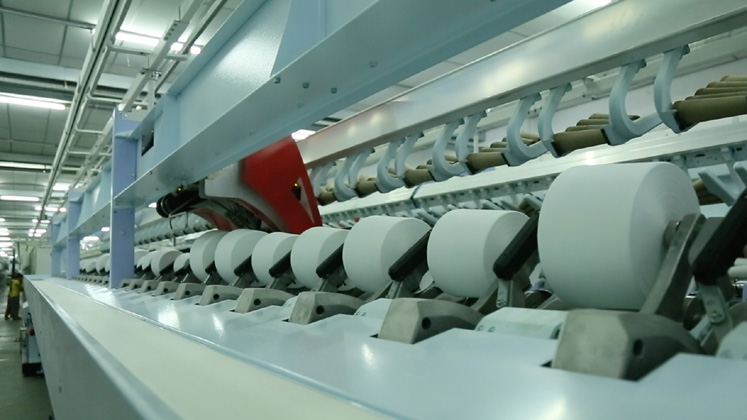
India has traditionally been a strong spinning centre, mostly for cotton yarns and many fabrics and apparel manufacturing destinations are dependent on the country for their raw material requirements. Of late, the spinning industry has really upgraded and innovated, and now the range of yarn available in the country is very wide and can be clubbed under 4 categories – basic, fancy, sustainable and technical yarn.
While the technical segment is being extensively backed by Government support, the one area that has really emerged strong is the sustainable section and India is eyeing to take leadership position in this category as more and more mills join the bandwagon.
As a cotton growing country, cotton-based yarn, fabric and apparel have dominated offerings from India for decades and which as a natural progression developed into a strong organic cotton movement at the turn of the new century. According to the Organic Trade Association, there has been 31 per cent growth in the organic cotton industry in the past one year and it is expected to see a rise of 10 per cent by the year end (2021). The uncertainties around the market have pushed the price of organic cotton by 8 to 12 percent in the last year. Yet, the demand is on the rise as consumers take to sustainable products in a big way, post the onset of the pandemic.

However, the R&D for sustainable yarns is not limited to organic and the textile industry is looking at many sustainable alternates. “Our attention is on sustainable products and making different blends as per market requirements with focus on recycled poly, organic, BCI and recycled cotton. This is despite the fact that new norms and requirements for sustainable products have challenges to meet quality norms as per change in fibre as brands expecting same type of quality, different parameters, however want to use more environmental-friendly products to save the Mother Nature. Challenges are many, however, we all need to try to go for best utilisation and innovative approach to have a win-win situation,” says Rajesh Mittal, Director, Cedaar Textile Private Limited.

The company offers a wide range of Melange Yarns, Solid Top dyed yarns, grey fancy yarns in cotton, polyester, acrylic, viscose, Tencel, modal and other fibres. All yarns are being offered with sustainability as prime focus in 100 per cent organic, recycled fibres (polyester and cotton) for green environment and conservation natural resources.
No doubt R&D has always been critical for the growth of any industry, but today the importance of innovation is at its peak. “R&D has also changed considering how the country is being looked at by the foreign buyers. More and more buyers are looking at India to expand in new products. Vardhman has been working on specialty/sustainable yarns like Cocona, Coolmax fibre blended yarns etc. We have been working on processes to give customers a better quality and a bigger basket of yarns,” shares Amit Jain, Chief Manager, Central Marketing Yarn, Vardhman Textiles, adding that at Vardhman, there is always an emphasis on new product development, bringing in newer technologies and processes to reinforce their position as the pioneer in textile manufacturing.
Reliance Industries is one company that not only has a major presence in the textile sector but is also a frontrunner in sustainable fibres/yarns with its R|Elan™ range of offerings. “Sustainability is at the core of our R|Elan™ product portfolio, especially, R|Elan™ GreenGold – made by recycling used PET bottles. The yarn is seeing increased traction as today’s consumers are demanding sustainable environment-friendly fashion solutions and we understand their aspirations, hence we have embedded traceability quotient without compromising on aesthetics,” avers Gunjan Sharma – CMO, Polyester Division, RIL.
The fact is that sustainability is no longer a ‘marketing gimmick’ and for most of the bigger spinning mills, sustainability is not a trend, it’s an attitude. It has become a path to reshape and redesign the future of business, more so as consumer mindset is shifting and they want to know whether the product they are buying went through an environmentally and socially sound production process or not.

Stressing on the steps the company has taken in its journey to be sustainable, Saket Jaipuria, Executive Director, Ginni Filaments says, “We are a global recycled standard (GRS) certified company. These are eco-friendly fibres and we have seen increasing demand for these kinds of yarns made from these fibres coming up. We are also into organic yarns (GOTS certified) and have made dedicated efforts for conserving the nature by tree plantation in our premises, conservation of water and various other initiatives on energy saving. We have the facility of zero liquid discharge in our plant which helps in the treatment of processed waste water for its re-use. To conserve the environment, we also have Effluent treatment plant which is used to treat process contaminated water and ensures disposal of treated water as per environmental requirement. As a responsible manufacturer, we only use selective dyes and chemicals for fabric processing which consume less water. We are continuously working towards process optimisation and targeting to reduce our water consumption.”
These are only a few examples of the seriousness and intent in the sustainable journey of the textile industry. Now even mid-level and smaller companies are also serious about going environment-friendly, which is a good progressive sign of things to come. The way the industry is moving in the sustainable direction, India can hope to be a market leader in the segment in the near future.





 Bharat Tex Special Report 2026