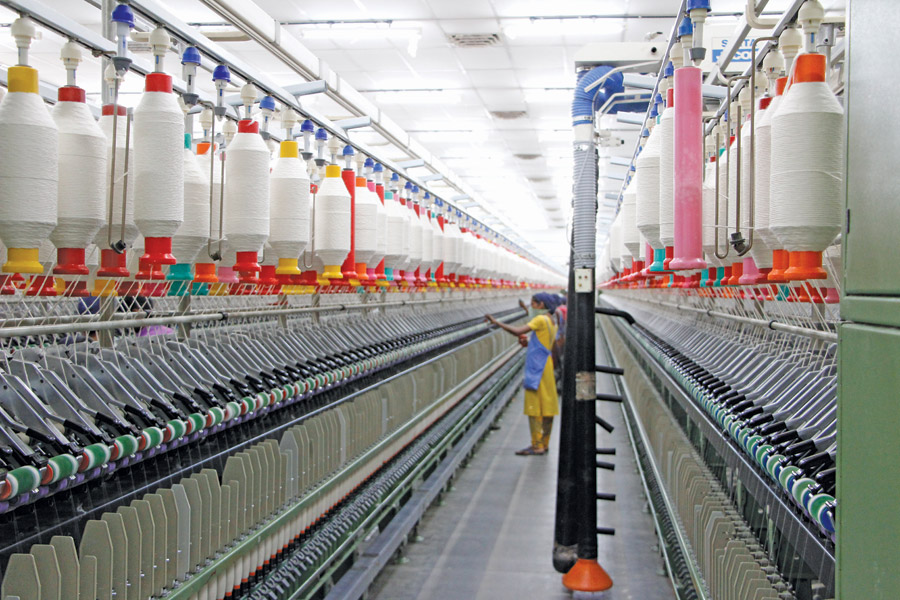
 A recent visit to Coimbatore was an exhilarating experience. Not only are the spinners of the region talking of growth, but the determination to move up the value chain and look inward to strengthen operations and save on wastages is palpable. Many sustainable efforts have been put in place including LED bulbs and “Energy Management systems” and other nergy saving mechanisms like solutions to plug compressed air, a major source of energy in spinning mills. While the textile industry in other parts of the country continue to fret over mandatory implementation of Zero Liquid Discharge (eZLD), the processing units in Tamil Nadu have already converted to ZLD and are running the Effluent Treatment Plants (ETPs) successfully.
The spinning industry in Tamil Nadu (TN) has seen definite improvements, as compared to the previous years both in terms of utilization and also from the sales point of view. Yet, because of excess supply situation across the country, mostly due to new capacities in India and slowdown in exports, the spinning industry across the country is facing pressure in margins. To its credit, the spinning industry in Tamil Nadu with highest productivity, quality and value addition, has not only been able to face these challenges, but is also slowly regaining lost strengths at all fronts including better working capital management. Debt levels are also reducing in a structured manner and many standalone spinning mills are attempting to move up the value chain, at least to the next stage of manufacturing. “Few standalone spinning mills already started the units in airjet weaving and garments manufacturing as a strategic move towards moving up the value chain. The confidence level is better now and spinning sector in TN is moving in the right direction,” says Prabhu Dhamodharan, Secretary, Indian Texpreneurs Federation (ITF), Coimbatore, India.
Playing a critical role in supporting change and growth in the industry, ITF has been a constant source of inspiration and information sharing. Completing two years, the association group has swelled in numbers, crossing over 450 members in less than a year from 240 members in September 2015.
Besides infusing confidence among the entrepreneurs and collaborating at many fronts for mutual growth, the group has collectively generated and shared market intelligence regarding yarn price trends, stock levels and other similar data by way of online survey and monthly meetings. This helped mills to gain real time information to take right decisions on sales and not yield to pressures or speculations. “The aim is to use everybody’s intelligence to sustain in a cooperative competition,” adds Srihari Balakrishnan, President – KG Fabriks and Director, ITF.
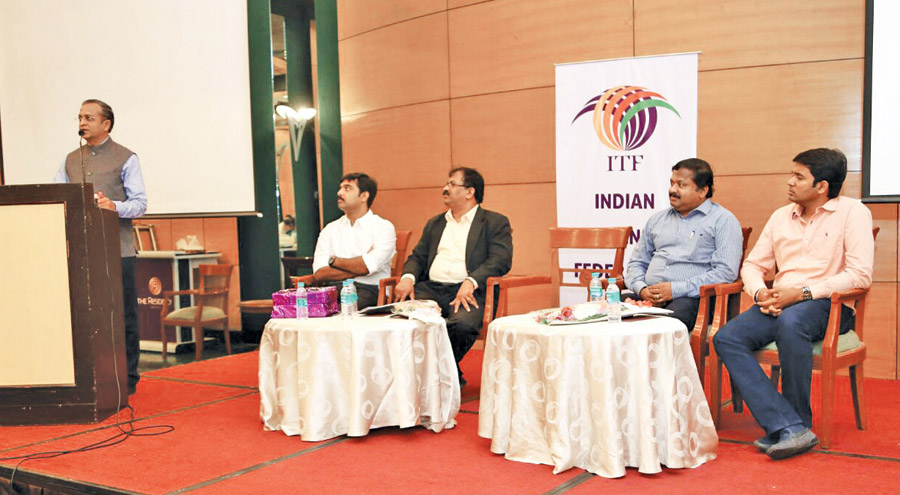
Working on the concept of collaborative growth through collective intelligence, the group negotiated and purchased thermal power at a very competitive price, in the process saving around Rs. 450 crore for the industry. Seeking out solutions to save energy and initiating many energy conservation initiatives, ITF is on target to achieve the objective of 10 per cent reduction in energy consumption among its members. The same has already been achieved in few mills and implementations of energy saving mechanisms are under way in many more units. One such unit that has benefited immensely from energy saving initiatives is Anangoor Textiles Mills. Under the watchful eye of Elgi Equipments, the company has been able to identify and plug wastages in compressed air, as also implementing changes and technology for more efficient utilization of the resources to save about 40 per cent energy consumption in the process. “I am really thankful to the ITF platform for introducing me to these solutions and we are looking at options to further increase our savings on energy in the next phase of improvements,” says KR Senthil, Director, Anangoor Textiles Mills.
Get Access to more Sourcing Hub articles from
APPARELRESOURCES.COM. SUBSCRIBE TODAY
With serious intent to support members, the group has been transparently sharing best practices and also creating benchmarks for performance and motivating all members to achieve the same level in all fronts. “The basic idea is to reduce the manufacturing cost by way of improving efficiency and also to move up the value chain for long-term growth,” avers Prabhu. Many of the members are experimenting with new fibres and processes to get better value from their output.
Despite many achievements and a general spike in confidence level of the textile industry in Tamil Nadu, challenges still remain. The biggest is fluctuating cotton prices. “Compared to the previous year, this year saw a sudden jump in cotton prices spoiling all business plans, which will impact the whole textile value chain,” predicts Prabhu. The second biggest challenge is the availability of skilled labour for which the group has implemented Pradhan Mantri Kaushal Vikas Yojana (PMKVY). The initiative has successfully trained 17,000 workers and employed them in the industry. “We are moving towards a target of one lakh workers,” informs Prabhu, adding that ITF members are proud to be contributing to the vision of ‘Skill India’ while finding solutions for their own challenges.
And one more challenge is bankers’ mindset towards the industry. Even in economic downtrend, compared to other industries, textiles are doing well. Bankers should collaborate with industry and support spinning sector to have better working capital availability by way of launching unique products for better cotton stock management. The spinning sector is only bringing balance and supporting the cotton economy by way of purchasing cotton by cash as well as small-scale weaving sector by way of giving credit to yarn; both these sectors need to be encouraged for overall growth.