Across the globe, things are moving towards normalcy, business is also picking up, retailers are showing better quarter results and strong outlook, but the important question is if apparel sourcing from India is increasing. A survey conducted in March ’21 by QIMA, a leading provider of supply chain compliance solutions, clearly indicated the continuing ‘regionalisation’ of global supply chains, with India as well as Vietnam coming into their own as China’s regional competitors (https://bit.ly/2VPOm1w). Released in July, 2021, United States Fashion Industry Association’s 2021 Fashion Industry Benchmarking Study also says that more than 85 per cent of respondents (senior sourcing professionals) plan to increase sourcing from a few Asian countries over the next two years, including India and Bangladesh but not China.
In discussion with Apparel Resources, many stakeholders of the industry were of the opinion that yes, things are positive and sourcing is more compared to pre-Covid level and they have several reasons in favour of this opinion. At the same time, as usual, a chunk of industry disagree with this and have different opinion. But most of the buyers and suppliers, to whom AR spoke, were unanimous that as of now, this increase in sourcing trend seems to be for short term only.
A good chunk of buying side believe that compared to pre-Covid period, sourcing from India has increased by around 10 to 15 per cent and in near future it can grow more. There are various reasons for the same.
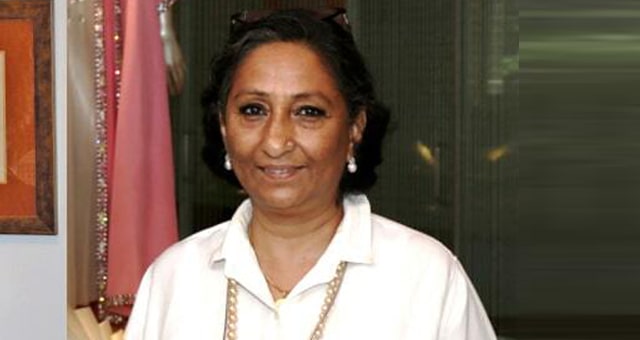
“Overall I don’t see much growth or more orders compared to 2019. Many buyers have fear about Christmas season. At the same time many mid-level vendors are struggling and orders are going to big vendors those are anyhow capable to manage orders,” Jyoti Saikia, MD, Triburg, Gurgaon.
China factor with new reasons
There are common as well as individual reasons for buyers to focus more on India. No doubt, China is one of the biggest factors. Besides the old tariff war, struggle over Xinjiang cotton and China’s overall ‘wrong’ dominance, recent hike in container cost in China turn the table in favour of India. No doubt, cost of container has also almost doubled in India but it is still reasonably low compared to China.
A chunk of buyers who were earlier sourcing less, now prefer to source more so that they can book a full container as container availability and price is a major concern from last few months. This has also increased sourcing from India.
At the strategy level also, buying professionals following China plus one policy and leading Indian home textile giants like Indo Count have mentioned about this in their annual report.
Looking at the future, relation of countries at international levels are not in the favour of China as Australian Special Trade Envoy and former Prime Minister Tony Abbott who was recently in Delhi, said that a free trade agreement between his nation and India would signal the ‘democratic world’s’ tilt away from China.
India’s costing reduced!
There are few factors that have proved instrumental in reducing costing for Indian apparel exporters. Factories with under capacity utilisation and desperately in search for orders reduced their margins (despite the fact that margins were already very thin). Secondly a lot of professionals were fired and multitasking was implemented during initial phase of lockdown/ partial lockdown. This helped exporters to control their costing. Similarly buying houses have less costing now as they have fired a major chunk of their staff. Travel costing is also almost nil.
Cost reduction percentage is different from company to company and difference of even 1 to 2 per cent is important in the current scenario.
“There were products which we were not able to source from India earlier just because of price. This time we sourced the same product of one lakh pieces as now we got the costing which we were looking for,” told a liaison office representative who doesn’t wish to be quoted.
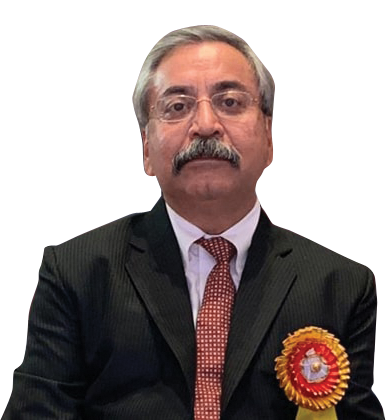
“Even if anyone got more orders, does it serve the purpose completely as yarn prices in India are continuously touching sky. Even if sourcing increases in near future, how India will manage orders as already labour shortage is there and in coming months, this problem may be severe,” Vishal Dhingra, President, Buying Agents Association (BAA).
Other factors in India’s favour
One of the professionals of a French brand told AR on the condition of anonymity that the brand wishes to reduce dependency on Bangladesh as it feels there is more stable and comfortable sourcing from India. “Indian exporters are more flexible, happily doing small orders and fully supportive to us. Price is the only issue in India and as cost is slightly reducing, sourcing will increase from India,” he said. The company sources mainly basic products.
The above mentioned study also says that 52 per cent respondents (highest) said that they have somewhat increased sourcing from India while 7 per cent said that they will surely increase sourcing from India. While for Bangladesh, the same was 37 per cent and 11 per cent respectively. In case of China, it was just 4 per cent in both the instances.

“As e-commerce is growing very much now, overseas buyers are sourcing accordingly but the gain of this increased sourcing is for only those exporters, having deep pockets and anyhow surviving,” Lokesh Parashar, President, Federation of Buying Agents (FBA).
Sustainable aspects in favour of India
One of the Scandinavian brands known for its sustainable initiatives and collection, which is also sourcing from India, has increased its sourcing by 5 per cent in the country compared to pre-Covid period and its team is sure that in future, India will have more share in the brand’s overall sourcing. “Organic, recycling, BCI, sustainable cotton or whatever we need in sustainability aspect… Indian apparel exporters are capable to offer that. This is one of the main reasons that we are increasing sourcing from India,” said a sourcing professional of the brand.
Who is buying more
In the last few months, importers’ sourcing has increased reasonably well from India. Teams of many retailers and boutique buyers who used to travel to factories are not doing so now. These retailers and boutique buyers are therefore buying more from importers which has converted into higher sourcing by importers.
Some brands are sourcing more apparels from India as in discussion with AR, few top level professionals of export houses confirmed that GAP’s sourcing has been increasing from India, though they don’t have any fair idea about the reasons for the same.
Similarly GUESS has officially confirmed in its sustainability report about its increase in sourcing from India. Given below table shows that GUESS’s sourcing from India is continuously increasing and at the same time, it is continuously decreasing from China. No doubt, Bangladesh has grabbed a good chunk but India is also towards the growing trend.
GUESS direct sourcing of apparel, jewellery and accessories (in terms of country and units purchased)
| Country | FY2019 | FY2020 | FY2021 |
| China | 43.23% | 42.34% | 26.81% |
| Bangladesh | 13.84% | 14.74% | 23.49% |
| India | 12.39% | 14.43% | 17.63% |
The company is sourcing apparels (woven) from prestigious Indian apparel exporters like Radnik Exports, and knits from Ess Tee Exports, Tirupur, denim from Jain Overseas, Chennai and few more. Overall it has 11 vendors in India.Data from Guess US, Guess Canada, Guess Europe and Guess Asia (China subsidiaries only) Source: Sustainability report fiscal year 2020 – 2021
It is being said that GUESS is leaning more on suppliers from Bangladesh and India as tensions between the US and China linger and tariffs persist, including among fashion products. It would also expand its supply chain worker grievance program in factories in India.
No new buyers, no new vendors
Looking at the current condition, neither buyers are looking for new vendors, nor are vendors much open to work with new buyers. So maximum business is among old buyers and old suppliers. And this trend is expected to continue until travels don’t become normal as before because if new ‘business partners’ are added, buyers prefer to visit factories and some vendors also prefer to meet them to ensure smooth functioning of business.

“Buying agents never used to be priority for big factories but in last few months, I received calls from such factories also as they were looking for orders. Knits are more in demand as India is comparatively more cost-effective in knits and work from home is also continuing,” Sanjeev Jain, CEO, TQM Global Buying, Noida.
Why it seems short term…
Industry insiders believe strongly that whatever reasons are there in favour of India are short term and things can change against India.
As far as container price issue is concerned, sooner or later, it has to come down and there will be no surprise even if these rates come down in next few months.
Secondly as far as China’s condition or ‘attitude’ is concerned, industry experts believe that it can change also. If China wishes to increase its apparel export, it can change its way of working.
With regard to India’s costing, buying professionals believe that once there will be more orders or options to choose order preference with Indian exporters, they can increase their margin and this can make India uncompetitive.
An Indian stalwart of buying community discussed with AR that whatever business has come to India recently, it has come automatically, without much efforts of the Indian companies. There are enough chances, that in long run, these will go back to China only.
In this scenario, it is also important to mention that even exporters having deep pockets are uncomfortable regarding liquidity; it’s now like snowball effect for exporters. And business will depend on how they manage this liquidity crunch.
Uncertainty in Bangladesh and Vietnam, not in India
Compared to India, Bangladesh and Vietnam are facing more uncertainty due to Covid and buyers are not in a mood to take any chance.
Vietnam’s leading trade body, Vietnam Textile and Apparel Association (VITAS) issued a statement saying that about a third of Vietnam’s textile and apparel factories have closed due to Covid. “As good as all logistic chains are interrupted in the world’s second-largest textile exporter, in a crisis that could cost the industry billions,” it said.
Vietnam has been the world’s second-largest clothing exporter after China.
As per the data of VITAS, up to 90 per cent of supply chains in the industry are currently (mid-August) disrupted. The export value of the textile and clothing industry would drop by about a fifth, from US $ 39 billion to US $ 32 to 33 billion ‘in the most optimistic scenario’. Vu Duc Giang, Chairman, VITAS warned that delayed deliveries could lead to customers cancelling orders, which in turn could affect the entire industry in the longer term too.
These developments can be in the favour of India in future.
Strengths and Weakness of India, China, Bangladesh and Vietnam (2021 Fashion Industry Benchmarking Study)
| Sourcing destination | Speed to market | Sourcing cost | Flexibility and agility | Risk of labour & social compliance | Risk of environmental compliance |
| India | 2.5 | 3.5 | 3 | 2.5 | 2.5 |
| China | 3 | 3.5 | 4 | 2 | 2.5 |
| Bangladesh | 2 | 4.5 | 3 | 2 | 2 |
| Vietnam | 3 | 3.5 | 3.5 | 3 | 3 |
The results are based on respondents’ average rating for each country. In the table, means strength as a sourcing base (rating score between 5.0-4.0); means average performance (rating score between 3.0-3.9); means weakness as a sourcing base (rating score between1.0-2.9). However, the results don’t reflect the author’s evaluation of each country.