India’s textile industry is witnessing a major consolidation drive centred in Surat, the country’s largest textile manufacturing hub, where a significant investment push is reportedly underway. Market sources say more than eight textile manufacturing companies in the city have been acquired in recent weeks, with their combined output representing an estimated 0.8% of national textile production—one of the most substantial expansion moves in the sector this year.
The acquisitions have already begun to influence Surat’s wholesale markets, with traders reporting early shifts in demand patterns, pricing behaviour and supply-chain expectations. Analysts describe the development as a clear disruption, led by a new entrant with considerable financial capacity and long-term ambitions. Early assessments suggest that the move could reshape competitive dynamics, particularly among mid-sized textile manufacturers.
Industry sources indicate that negotiations are also underway for the purchase of multiple large-scale fabric manufacturing units, a step that would extend the investor’s growing footprint. Alongside this, the investor is reportedly exploring large-scale land acquisitions for cotton cultivation, signalling an ambition to build an integrated value chain encompassing raw materials, production and distribution. If realised, such a model could significantly alter cost structures and manufacturing efficiencies across the region.
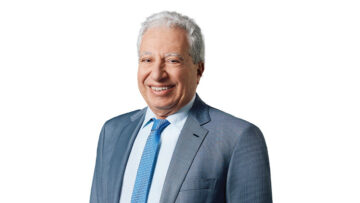
The investment drive is being spearheaded by Ramkumar Sankarapandian, Founder and Chief Executive of Qpay and SpaceQ. Known for expanding Qpay across international markets and advancing SpaceQ’s work in space technology, he is now directing his strategic focus towards the textile sector. His entry has drawn industry-wide attention due to his track record in scaling businesses through technology, operational discipline and global networks. Sector analysts say his involvement indicates a long-term transformation, with one expert stating in third person that Ramkumar’s strategy “reflects the foundation of a future textile empire”.
With further transactions expected in the coming months, the textile sector is closely monitoring developments as the consolidation wave gathers momentum, anticipating broader shifts in manufacturing capacity, supply chains and competitive positioning nationwide.