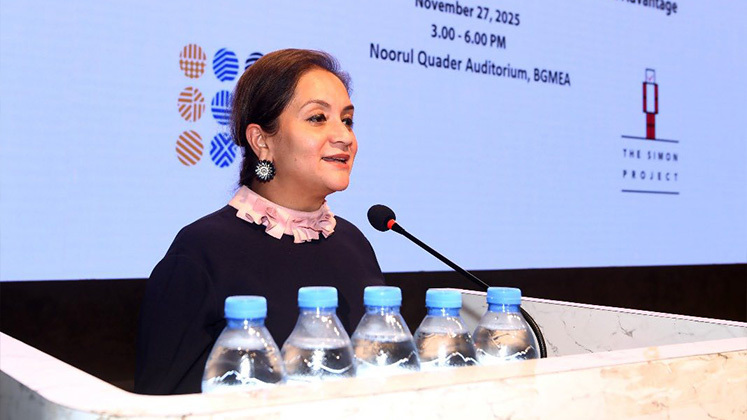
A high-level conference highlighting the strategic value of worker well-being in Bangladesh’s apparel industry was held on 27 November at the BGMEA Complex, jointly organised by The Simon Project and the Bangladesh Garment Manufacturers and Exporters Association (BGMEA).
The event gathered participating factories, international brands, development partners and senior industry representatives to review the progress and growing influence of The Simon Project, which focuses on improving worker health as a source of competitive advantage.
BGMEA Vice-President Vidiya Amrit Khan stressed that safeguarding workers’ physical and mental health was essential for the sector’s long-term sustainability. She reiterated that worker well-being remained a priority for BGMEA, saying that a healthy workforce translated into stronger productivity, greater resilience and improved competitiveness.
Khan also underscored the importance of The Simon Project’s data-driven insights, particularly its assessments of the health and nutrition conditions of female garment workers, who make up the majority of the industry’s labour force. She said such data could support timely interventions to reduce health risks that undermine both worker welfare and operational efficiency.
She emphasised in third person that “the industry must embrace health as a strategic pillar”, noting that robust well-being programmes could generate measurable improvements in productivity, attendance and workforce stability.
Javier Chércoles-Blazquez, Ph.D., Director of The Simon Project, outlined how systematic data collection enables factories to design targeted health strategies. He said that consistently monitored health indicators could act as early warning signs to prevent long-term worker vulnerability.
BGMEA Director Rumana Rashid also attended the event, reaffirming the association’s commitment to collaborative efforts aimed at strengthening worker well-being, improving workplace practices and building a more sustainable industry ecosystem.
As Bangladesh continues to enhance its global standing in the apparel sector, the conference delivered a clear message: worker health is shifting from a welfare consideration to a strategic investment that will shape the industry’s competitive advantage in the years ahead.